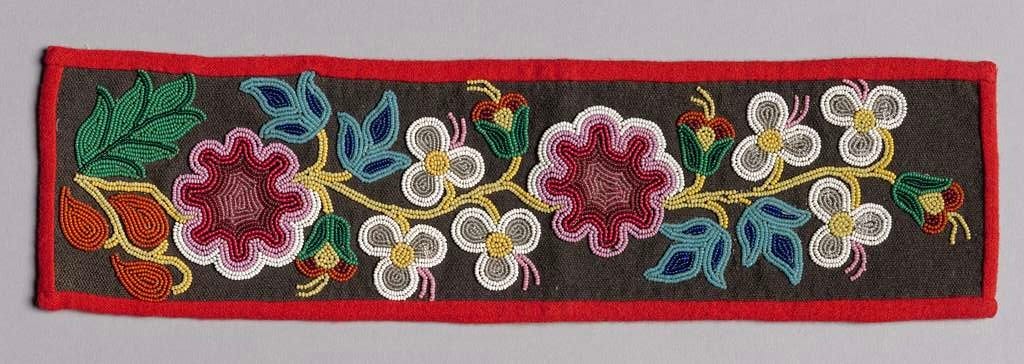
That's Wild Ginger!
Red eyes in the dirt

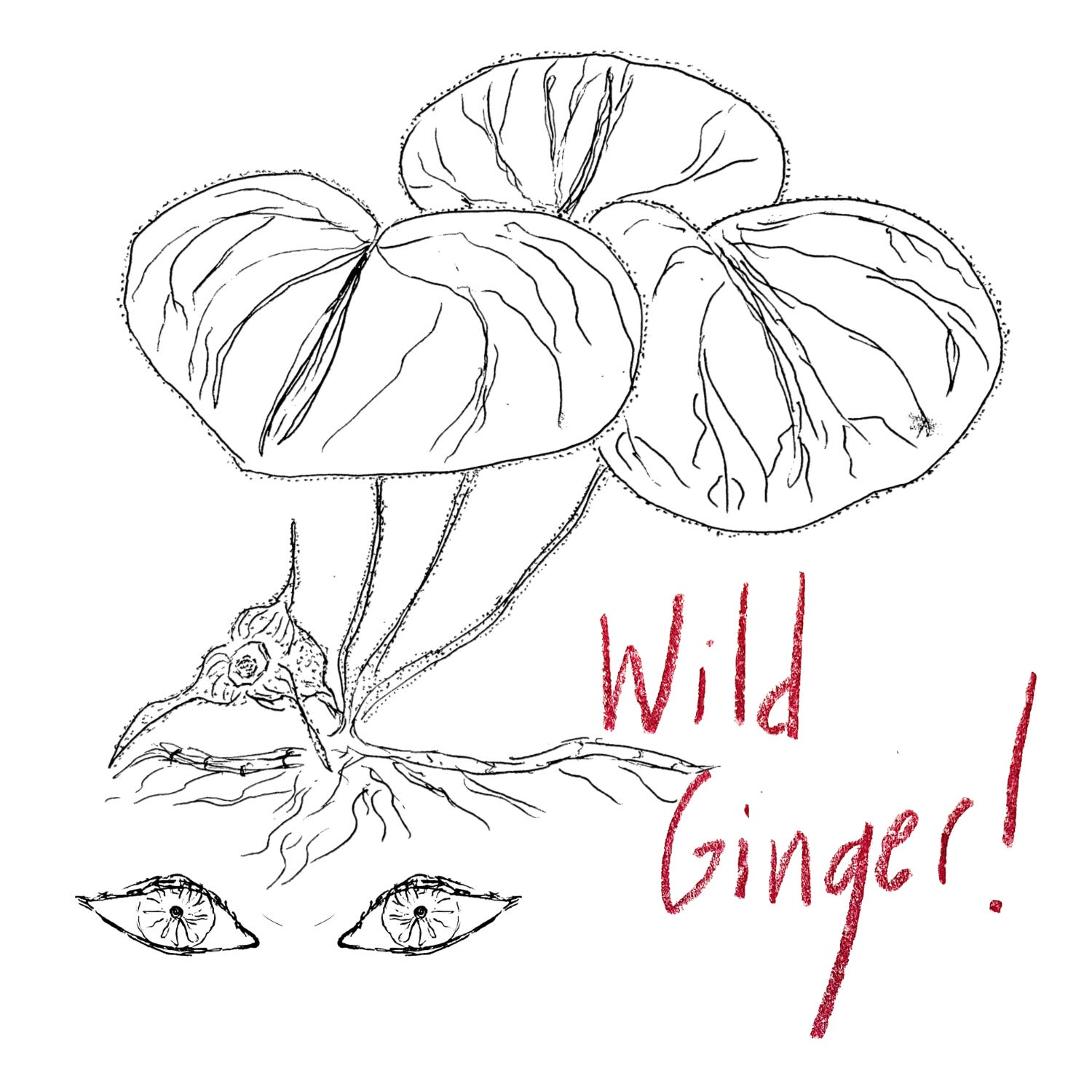
ALSO KNOWN AS: Asarum canadense L., Canadian wild ginger, common wild ginger, Canadian snakeroot, namepin (how to say it),or “plant of small tubers”
Imagine the Laurentide glacier that loped through the Northeast was alive. Its tracks are everywhere. From the Palisades along the Hudson River to the mountains in Vermont to the ridge in Minnesota overlooking the once long and swaying prairie now turned to an abyss of corn and soy. That glacier was massive. Vermont’s Green Mountains were buried under two miles of ice, whose weight and tremendous scraping softened the entire land. There is a gentleness about the woodlands within these hewn borders. A softness to the humus floor lent by composting oak, beech, and maple leaves. The work of ice, long ago.
I’ve lived my life under broadleaved trees. I gawk at places that aren’t so humid, or so flat their rivers spread out. But most of all, it’s the forests I look for. Deciduous forests moved in when the glaciers receded and the climate warmed. They paint land with seasons. They dress and undress themselves in extreme displays, shedding everything to the land each winter. They let it all go with the abandon of falling asleep. I wonder if, like dreamers, tree communication is different in the winter. Bright eyed ephemerals wake within them in spring.
The Eastern woodland peoples who lived here were instrumental in cultivating land the glaciers passed to them and the rest of the beings who live here. As may be the case, humans are the mythic fire starters, one of the important aspects to holding this space was fire setting. Controlled burns bring nitrogen into the soil and germinate seeds. The eastern woodlands would benefit from these periodic burns. And while the burns are dramatically fewer - barely there fewer - this is still true - not only for the health of the soil, but to manage ticks and aggressively populating species.
Scrap the idea of “hunter gatherers,” wandering around like some half thought fragment. The Northeastern woodland peoples had camps, and specific places to mark the years. There was a moving together as the seasons changed - transforming each other.
One article I read asserted that humans have acted as “keystone species” in certain environments. Yes, this is possible.
As May dresses the trees the forest floor is covered in shades of darkness. Hidden in some of those most shadowed corners, acidic and raw, leaves cover over the earth to hold the water close. Dappled light this late in May. Home to wild ginger who remembers the fire only in its smoldering flowers and warm scent, and yet, it knows how to keep the forest moving. By tending to the soil.
Golden Threads
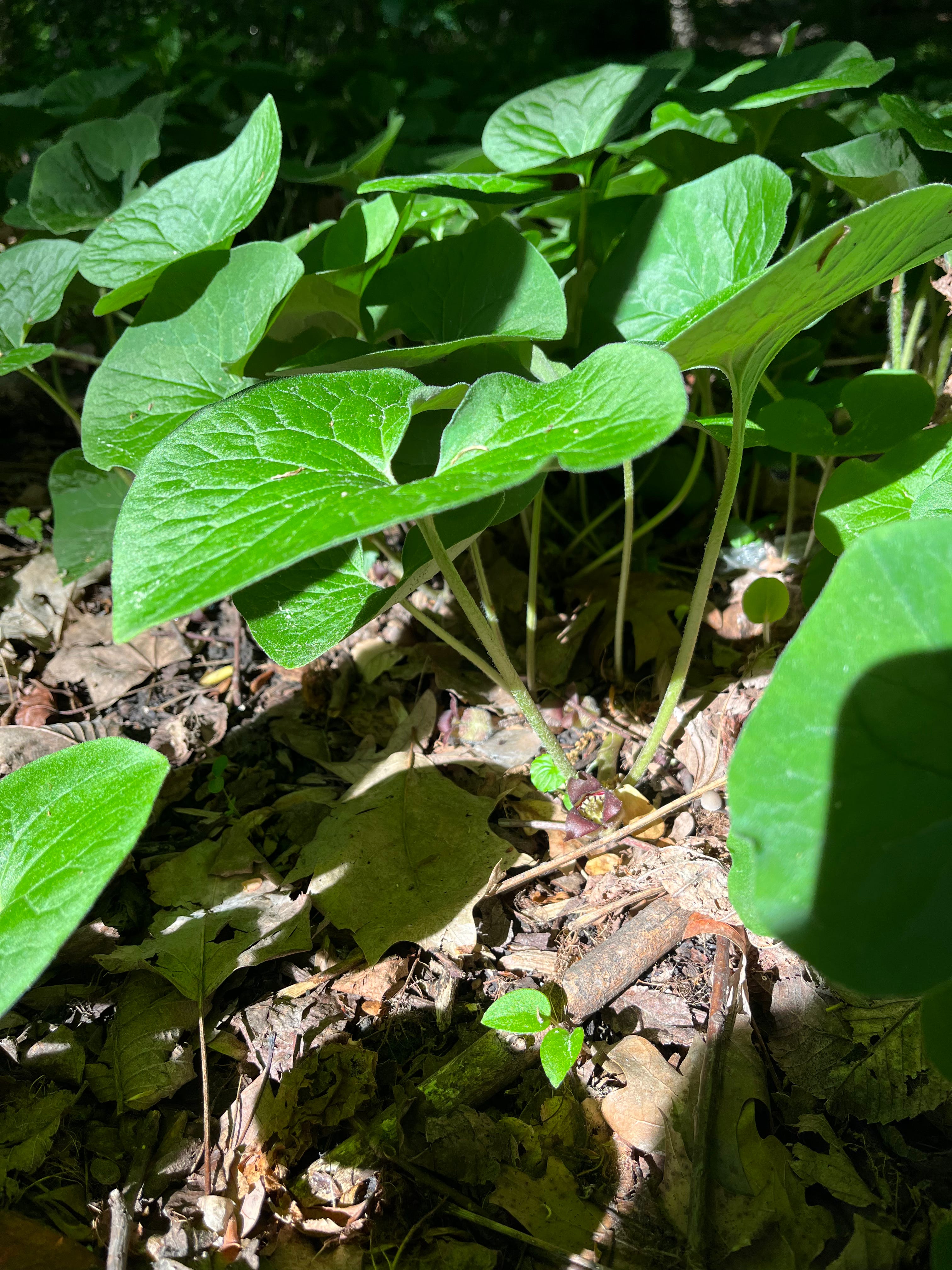
Wild ginger usually grows beside old boulders, even in rocky soil where shallow roots dodge the stones. Usually these are places where an ancient glacial erratic plummeted and lodged from cliffs of ice. Pebble scraped off a bare foot, a palace fallen from the sky, making a city of plant life all around it. As a colony, wild ginger links together hillsides or floodplains sewing the ground with its roots. Though they are all genetically the same plant, their roots expand six to eight inches every year, growing their circumference each spring like a spill in slow motion.
At first glance wild ginger together looks like an elevated floor of rounded kidney shaped leaf clusters, each about the size of your hand. Underneath these leaves the soil remains wet and the temperature regulated. Closer, they’re softened with tiny hairs. The leaves will emerge from the soil right after the thaw. Then flowers arch at the base of the plant, no more than a few centimeters from the top of the soil. These flowers have been described as tiny tipped urns with rounded bases. Every cluster of two or three leaves only gets that one flower. But to me they look like a single eye with a hexagonal iris. Eyes from the underworld alert between April and June. Or maybe doors where the putrid productive forest creates itself anew. Their bisexual arrangement has a sticky center and a frill of filaments Equally fuzzy, three dramatic sepals end in the gesticulation of an illustrious mustache. These three sepals have thin parallel lines referred to as targets for insects. My intuition sees these markings as a kind of language, though, dictating how the plant should be interacted with. A lexicon of color and pattern.
Conspiracy minded individuals insist wild ginger is not pollinated by any insects at all. They elucidate the way pollen quietly passes from the stamens directly to the pistil within the same plant. Plants don’t always need to diversify their DNA, especially when they move so slowly on roots, looping through the soil trying to fill every little space with green, like along the lines of a coloring book. But they do need to be pollinated from other plants, and in these cases they summon insects looking for those who did not survive the winter, bodies thawing on the ground, a tale of misunderstanding and sacrifice.
Like many flowers this color summon gnats, flies, and beetles come. When trees surrender their leaves, when death comes in the forest there are those who ensure the surrender is not lost. These insects work together with the plants to recycle all that life. The dark flower mimics smells and shapes of death and rot. So the insects will lay their eggs in these flowers, pollinating them as they go. But the plants are not food for the larva, thus the young will not survive to maturity, meanwhile the flowers have been cross pollinated with new DNA.
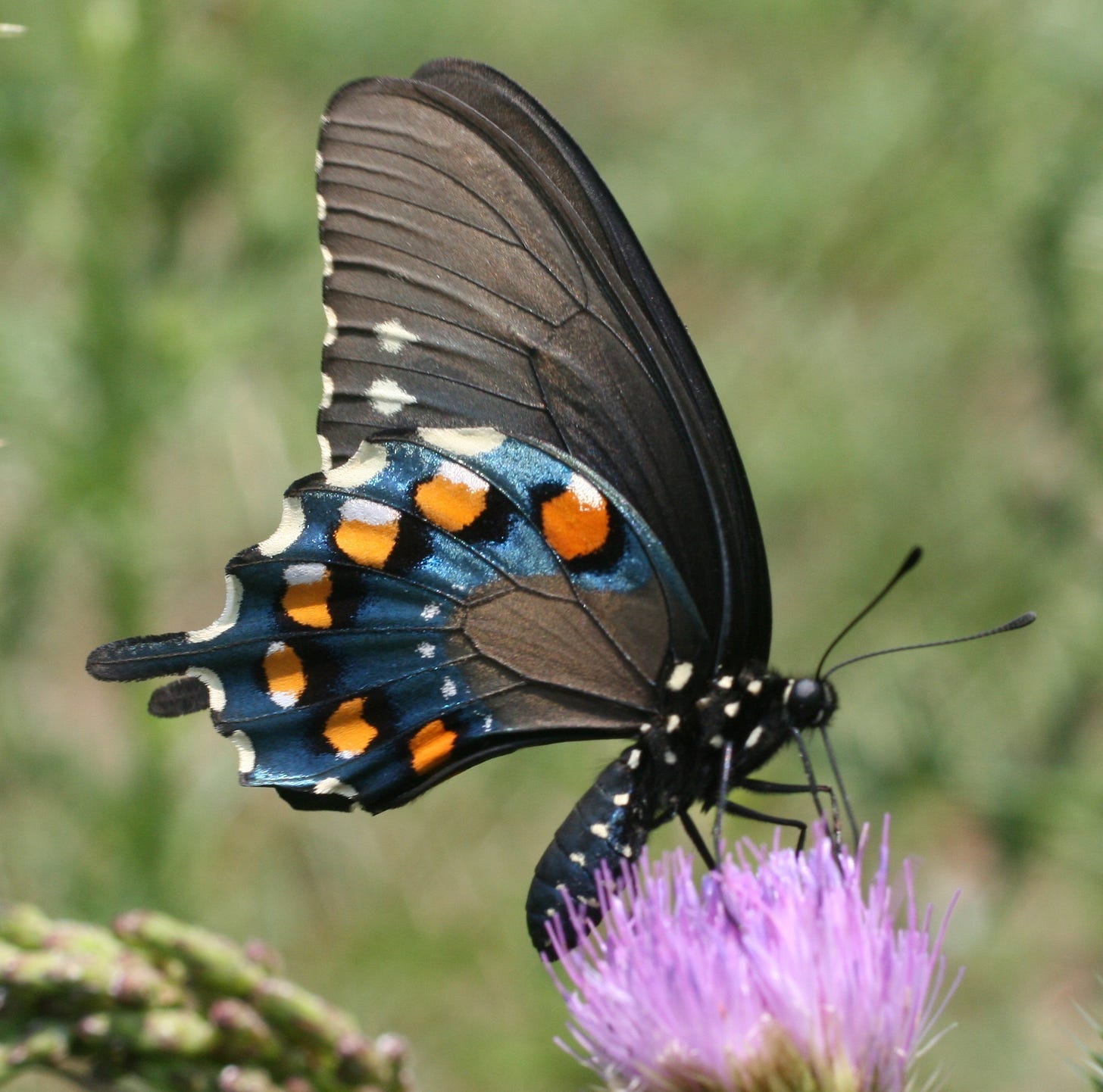
For wild ginger’s resourcefulness, it doesn’t need cross pollination for many seasons. So these sacrifices, or exchanges, are rare. However, not all is lost. The tiny urns can be the larval hosts for the pipevine swallowtail butterfly who rises dark like loose ash from the mass of leaves once they’re metamorphosed.
I think about the scene in Star Wars The Empire Strikes Back partially because of how gross it is. Here Han Solo saves Luke on the ice planet Hoth just after Luke encounters the ghost of Obi Wan Kenobi who tells him to be mentored by Yoda on that mushy swamp planet. Han Solo finds him in a blizzard. There is nothing but snow. The beast he came with falls dead from cold, a quick and unmourned tragedy. At the brink of death, Han Solo shoves a nearly frozen Luke inside a mess of pearly intestine after he’s sliced open the fallen beast’s belly.
Some flowers are more than just love interests or pleasure palaces for insects. They provide a humble dirt shelter. The only kind that matters when it counts.
Once pollinated, their ovaries swell into six chambers with egg-shaped purple seeds. As it is with many ephemeral flowers, these seeds have eliasomes, so ants eat their hem of sweet starch before planting them again.
It has no relation to the flame of tropical the ginger plant but it does have a warm, spicy scent, a name given by colonists who were careless and nostalgic in their naming. Careful lest we be so too. You can smell it when you rub their leaves. A release of essential oils from minuscule sacs on their flesh.
Wild ginger is in the birthwort family. A family whose fossil records date back to the early Cretaceous Period where ancient seeds were found in Virginia and Portugal. Over time the various plants developed into several genera and a little over one hundred wild gingers that span the northern hemisphere. There are maybe ten species native to the Americas. They all have the warm spice smell and these low, mauve flowers.
Plants of the forest, all.
Being an Organ
While it is not endangered - as long as deforestation and fragmentation is happening the wild ginger lives in precarity as a living breathing organ of the place.
For humans, wild ginger has been used as a poultice to treat wounds. Scientists have found an antibiotic in it that can be used in a medical setting. But the extraction and preparation to retrieve that compound is highly engineered.
Yes, it was used similarly to the southeast asian ginger root: made into syrup or candied, treating nausea and sweetening food. The medical uses include inducing sweat as a diaphoretic, appetite enhancing, and an aid in digestion. In Indigenous practices of the northeast woodlands, decoctions were used for ear infections. Every wild ginger is used in similar ways worldwide. There is an almost identical one in traditional Chinese medicine. However, people disagree about how dangerous it actually is. Similar to comfrey, alcohol draws out the dangerous aristolochic acid which, taken in large doses can be carcinogenic or induce kidney failure. But water does not. This is why it is traditionally ingested with teas (at least as far as medicines go). Please do not choose to harvest and consume wild ginger based on this writing.
The deep purplish red indicates anthocyanin. So it can be used as a dye, complete with mordant, to cover everything in a soft earth tone.
Large beings of ice and fire move constantly, and within them, like liver and kidneys, we live. We are part of some larger forest. Even here in Brooklyn. Even here, I am part of a forest, even if it’s just the memory of one. When we see the world as a massive beast in whose bellies we are surviving, we may begin acting with the same determination as lungs would, waking up to a purpose we have always had at our fingertips. Imagine we are the organ. Like ginger - like where it holds up the forest.
myth for wild ginger
Forager Friendly?!
I don’t feel qualified to answer this question! So go somewhere else to make that decision - not here! Don’t forage it on my watch!
Sources
https://www.fs.usda.gov/wildflowers/plant-of-the-week/asarum_canadense.shtml
Held by the Land, Leigh Joseph
https://extension.umd.edu/resource/wild-ginger/
Foraging New York, “Wildman” Steve Brill
https://marylandgrows.umd.edu/2021/04/12/wild-ginger-spices-up-the-maryland-spring/
Eastern/Central Medicinal Plants, Steven Foster / James Duke, Houghton Mifflin
From the Hudson to the Taconics: An Ecological and Cultural Field Guide to the Habitats of Columbia County, New York, Hawthorn Valley Farmscape Ecology Program
https://backyardforager.com/wild-ginger-asarum-canadense/
https://honest-food.net/wild-ginger-edible-toxic/
https://en.wikipedia.org/wiki/Asarum_caudatum
https://pmc.ncbi.nlm.nih.gov/articles/PMC5439001/
https://plants.jstor.org/stable/pdf/10.5555/al.ap.flora.fna003_asarum_canadense
https://www.jstor.org/stable/2425945?seq=7
https://www.jstor.org/stable/48688950?seq=1
https://www.jstor.org/stable/4033012?seq=1
https://www.nrs.fs.usda.gov/pubs/jrnl/2008/nrs_2008_nowacki_001.pdf