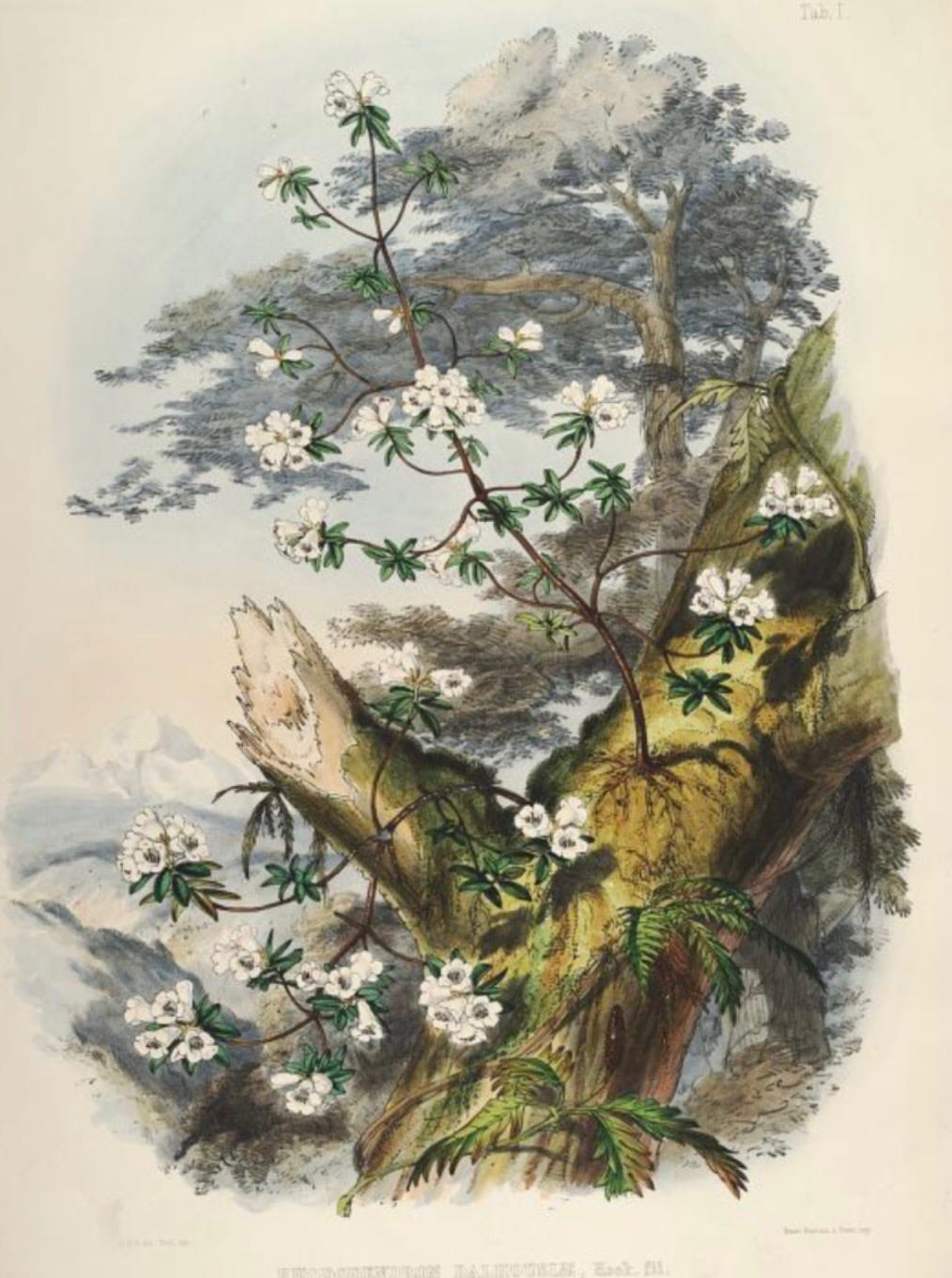
That's Sunpati!
Ghostly Rhododendron to keep us in our bodies

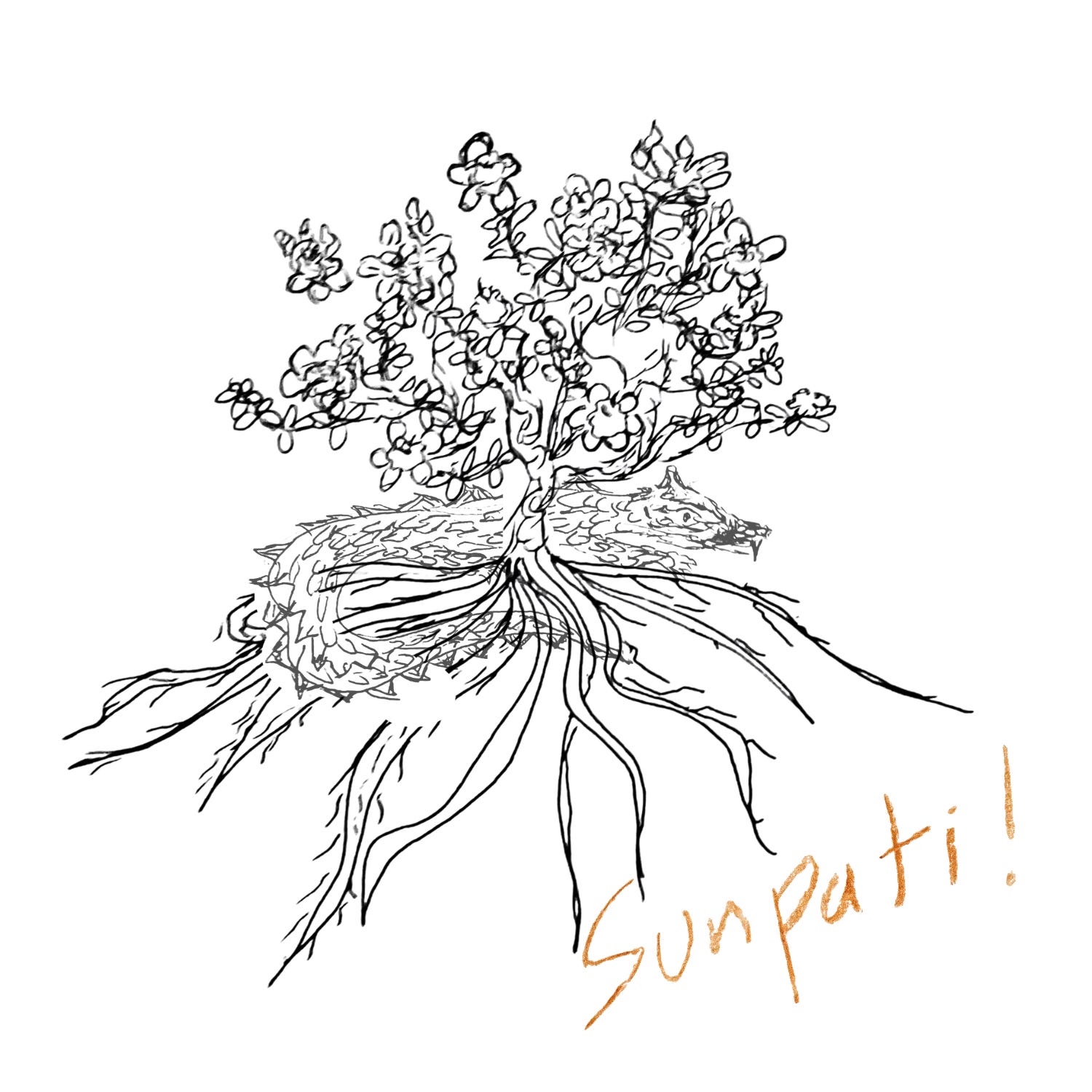
ALSO KNOWN AS: Laliman, dwarf Rhododendron, Rhododendron antrhopogon, Brass
I used to never sleep.
I would drink until everyone was blurred. It wasn’t the drunkenness, it was the noise, the unhooking from expectations I felt I was always failing at. “Freedom for now.” I would think, “I know. But now, I’m free -- in a place where gravity doesn’t exist.”
That was many years ago.
Now a woman sits across the subway. Leaning forward, hands folded, head up. A flurry of curls, hard edges, smooth curves. The subway jolts on. “Is she high or just extremely confident?” Feet solid on the ground, but somehow buoyant. Sunglasses on. White everything. Completely unafraid of stain. I’m not sure how else to put it. She was a dragon. You know a dragon by their scales, smooth and exact, and their pride. Somehow, both undeniable and weightless.
Then she left. Off the train and into the night. Whoosh. Gone. That’s New York. Having a crush on the L train, then letting them go as easily as the train doors close again.
Far away the mountains shiver.
Through mining and the natural instability of youth, the Himalayas are young and they shake. Parts of them fall by the hands of human extraction. Avalanches mark the mountains. The climate changes. These icy peaks melt and it’s a nightmare.
While there are about 25 rhododendrons native to the US, the Himalayan rhododendrons are what inspired landscape architects. Now, you know rhododendron by where it’s situated next to the clapboards of houses. Suburban frills of June, set and then let be because, ultimately, they live without minding humans much at all.
Leagues from where I write the Himalayan mountains are woven together by Sunpati, the Nepali name for, a “dwarf rhododendron” because of how much smaller it is compared to the 10 or 12 foot shrubs we know in the Americas. Above the tree line on alpine slopes, they have the spicy sweet scent of camphor. Protectors from the wind, they grow a knit blanket in clay, sand, loam or even a soft layer of peat. They don’t mind many soil types but rhododendrons need cool weather and a little acid. For the thick mat of shrubbery, sunpati doesn’t grow as rhizomes. It has long shallow roots that split one thousand times to become fine hair. They don’t have a taproot, simply sustain on the top soil where whatever just died is in the middle of decomposing.
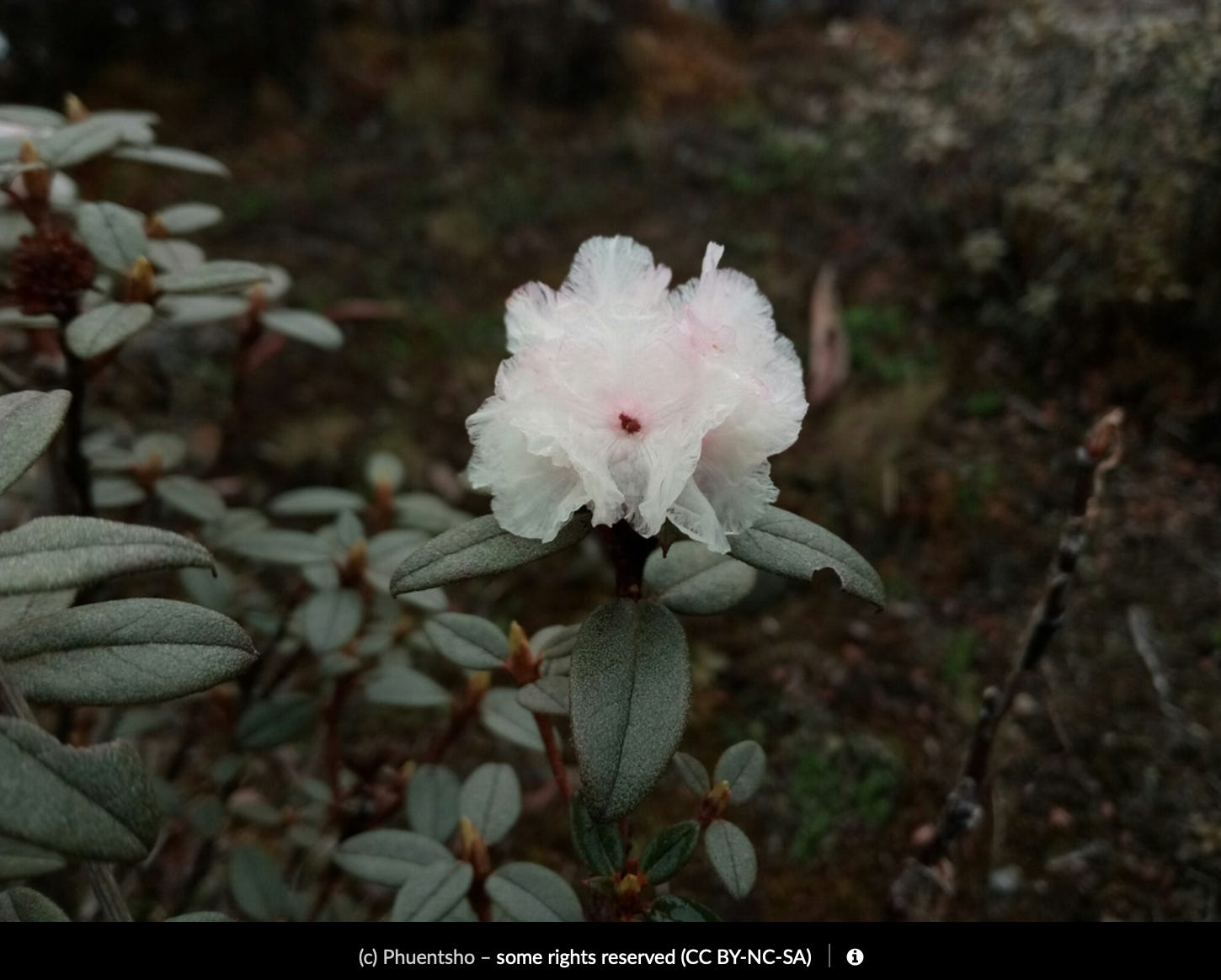
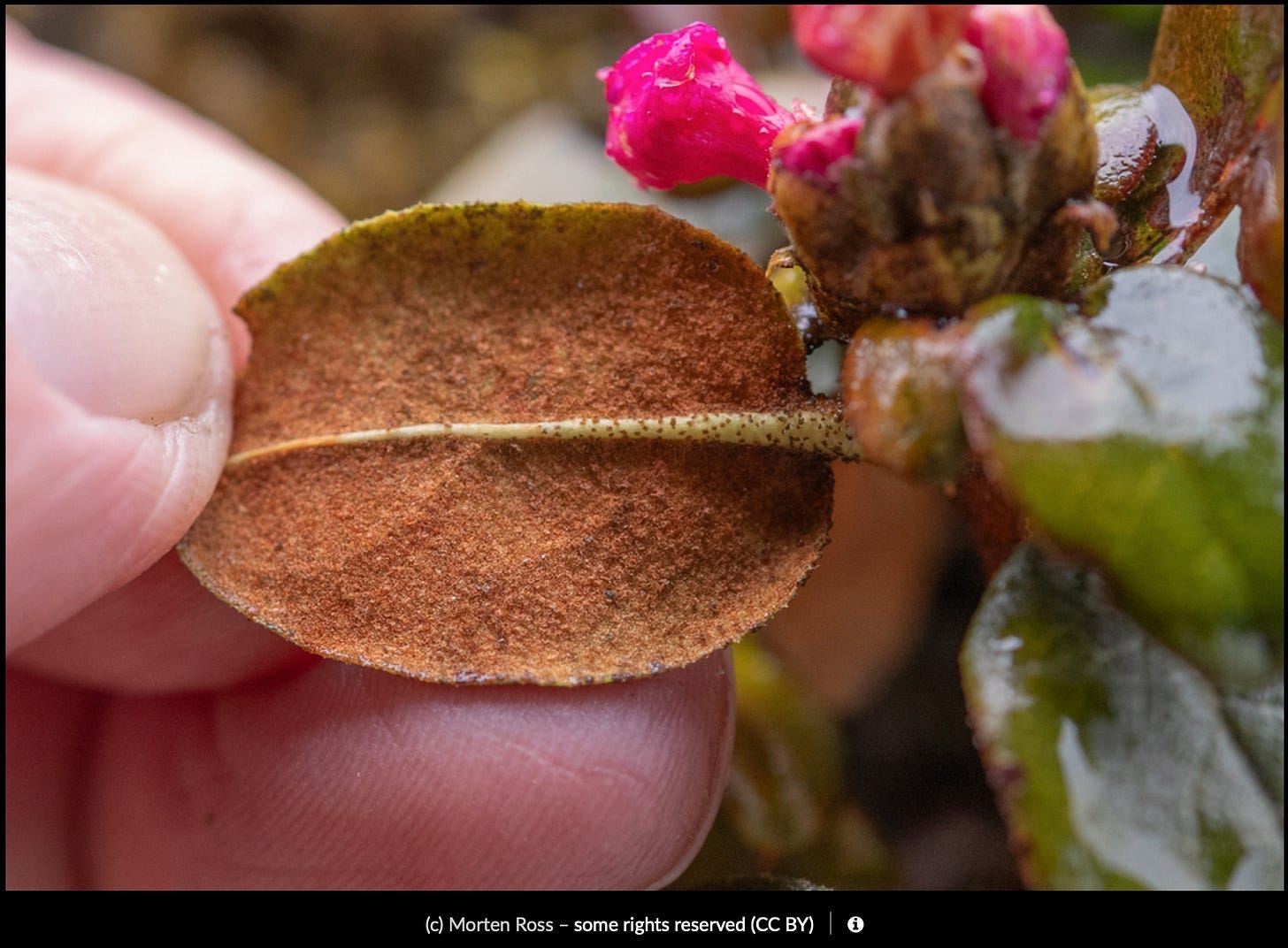
Sunpati are hard partiers all dressed in white. Every rhododendron bloom looks as confrontational as a Martha Stewart tea party decoration pompom. Whether they are aggressively strong or aggressively beautiful, they are sure to win each time. For the flowers, think, first, of a stake. They have three layers of sepals that look reptilian before blooming into a silken pale inflorescence, with no more than six blooms in each, a single stigma with long pale anthers around. Tubes of nectar to summon bees. Whorled leathery leaves circle the show with rusty undersides, like the scales of old iron armor.
There are about 1,000 rhododendrons, and while some are native to the Americas and Australia, the vast majority grow as a crown for India: from Pakistan down into Myanmar.
It grows, unpicky and abundant, highly adaptable as it releases genes that help it titrate up the mountain to vast ranges of montane environments. Sunpati is decidedly not endangered - not now. They probably don’t have to thank humans for their encouraging growth. But they do inhabit the hard won biodiverse Bhutan forests, where they live in the first carbon negative country in the world. However, with climate change, there is nowhere for sunpati to go, but up. And they’ve almost summited already.
Rhododendron means rose tree in Greek. It’s closely related to azalea and distant cousins to blueberry, cranberry, heather, and heath in the Ericaceae family. All hearty plants that are common on mountains or sucking up what little nutrients there are in an acidic environment.
Taking you away to keep you here
Each rhododendron is culturally valuable. Besides juniper, sunpati is one of the most sacred plants for the Nepali and Tibetan tantric Buddhist tradition. I am not a practitioner myself, but I understand the rituals to be repetitive, spoken, or acted with intention. Vajrayana is the “indestructible vehicle” leading a person to Enlightenment. And tantric tradition encourages one to engage in life with the wisdom and intelligence of their entire body. Tibetan Bön texts describe this plant as “Marpo Karpo” which means “red white” a warming plant that is protective during winters. The petals are nearly transparent and there is a single crimson dot hovering in the center of them. A slow fire inside.
On hard passes, it is still used by trans-Himalayan hikers to protect against frostbite. It will go with you through the dark - through the cold. Its smoke, as incense or a smoking mix, could keep away mischievous mountain spirits.
On a molecular level the tannins hold skin together. Anthropogonal for lungs, the floral, insecticidal, linalool, cleansing antiseptic, soothing anti-inflammatory, antioxidant; these are flavonoid glycosides, compounds bound to sugar molecules and helpful in preventing cancer.
Rhododendron is a foundational species in the Himalayas. In Nepal a crimson red rhododendron tree that grows up to 60 feet tall is the country’s national flower. Sunpati snakes through the mountain at no more than three feet. Its smokey flowers dot the plant, all together looking like a new brood of chicks. Ancient custom sees between people harvest sunpati between October and December in large baskets for daily morning ritual. People use it to breathe easier. The studies on this are incomplete but that’s the word on the street. For all of these fundamental ways sunpati makes life better, it’s ethnobotanically used each and every day as a release, opening up muscles, calming the mind, making us airy and keeping us here.
All rhododendron species have different levels of andromedotoxin, which is deadly to livestock and small mammals, though rarely humans. Prepared correctly in ritual healing ceremonies and it is used as a hallucinogen that takes the whole body, and can form long term hallucinations for up to two days. Sunpati likely doesn’t contain much of the toxin because it is not directly used to release humans from their daily reality.
Sunpati flowers keep us embodied.
Grounded. In a world with very little air, the flower enters the body keeping a person contained, keeping them directed and without disruption from the spirits of the mountain of which there would likely be many. In Bön tradition in which sunpati is sacred, “the moment just after death marks the beginning of a critical period in which the corpse becomes vulnerable to attacks by demons. These evil beings may enter the body and reanimate it...” So the body is guarded and carried away in a festival of color and sound to scare the demons. The sunpati plant is there at the ground, right where the dead first go, watching it before making space for a party all over the mountains.
Birds, nesting in the tortuous branches, fly away, like the dreams of the flowers themselves.
I would stay awake nights, and when the morning came my eyes hurt from light. Tantric Buddhism tells us we may find liberation through all the difficult times. Sunpati is a plant that represents the sacredness of the earth. I can’t imagine things that are much harder than walking through rarified mountain air, or living on shaking cliffs. But then again, this is life, a trembling feathery thing about to take off.
My hope is that if you’re strong, you’re also light, if you’re hard, you also have grace. My hope is that if you have a crush on the subway you can also let them go.
Your love is free.
myth for sunpati
Forager Friendly?
If you get there, if you know how to use it, then yes. Yes it is.
Sources
https://pfaf.org/user/Plant.aspx?LatinName=Rhododendron+anthopogon
https://www.sciencedirect.com/science/article/abs/pii/S0010482525001775
https://ask-ayurveda.com/wiki/article/5610-rhododendron-anthopogon
encyclopaedia.alpinegardensociety.net/plants/Rhododendron/anthopogon
https://www.sciencedirect.com/topics/agricultural-and-biological-sciences/linalool
https://www.almanac.com/rhododendron-care-and-growing-tips
https://pmc.ncbi.nlm.nih.gov/articles/PMC12231301/
https://explore.lib.virginia.edu/exhibits/show/dead/texts/transitions2
https://temperate.theferns.info/plant/Rhododendron+anthopogon
https://www.inaturalist.org/taxa/601903-Rhododendron-anthopogon
https://www.lionsroar.com/the-power-of-buddhist-tantra/