That's Marshmallow!
The real shit

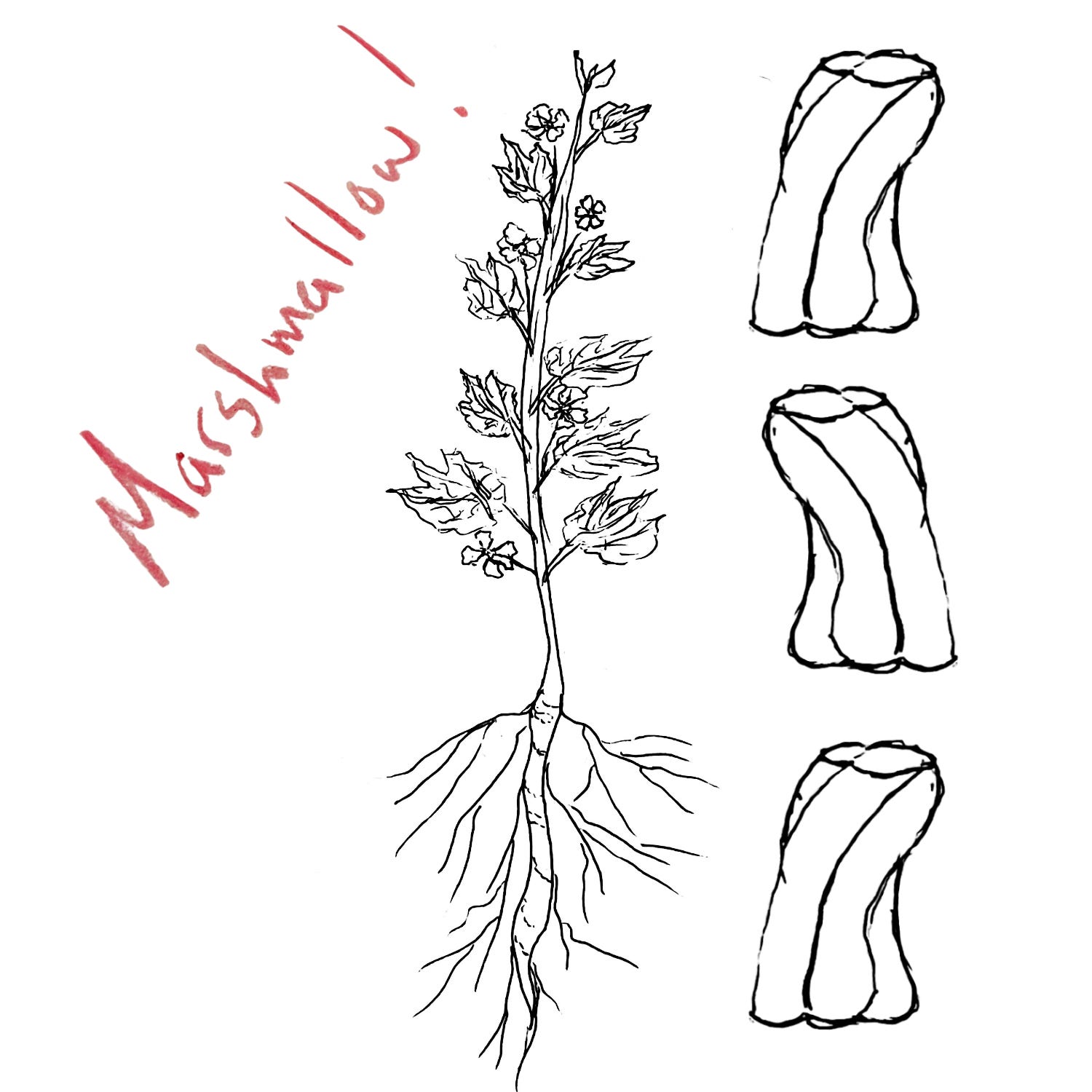
ALSO KNOWN AS: Althea officinalis, white mallow, merscmealwe, ḵeṭmi, moorish mallow, mallards, panirak, khatmi, schloss tea
I may fear abandon above all. Back in my twenties, at a bar with an ex, I asked him, “do you ever think that if you start crying you’ll never stop?”
I was shocked to hear him say no.
That might have been the moment when I realized my sadness was somehow abnormal, or at least something that may be detrimental to my every day, something that I would need to question.
On the other side I’ve felt I could drown myself in sugar. I can watch TV for a month straight. If I stop working I will literally never work again. I will sleep my entire life. If I start to dream the reverie will never end.
Living in the black and white, I have always known in my heart I would fail the marshmallow test. Either that or I never would touch a marshmallow again in my life, bound forever by a single rule. If marshmallow does one thing, it sticks, clinging to hair and fingers. I think I can understand some of that tenacity. Abstain forever, sleep forever, cry an ocean. Do they wonder about the child who eats one marshmallow and screams until they are hoarse for more?
Beauty Before the Beast
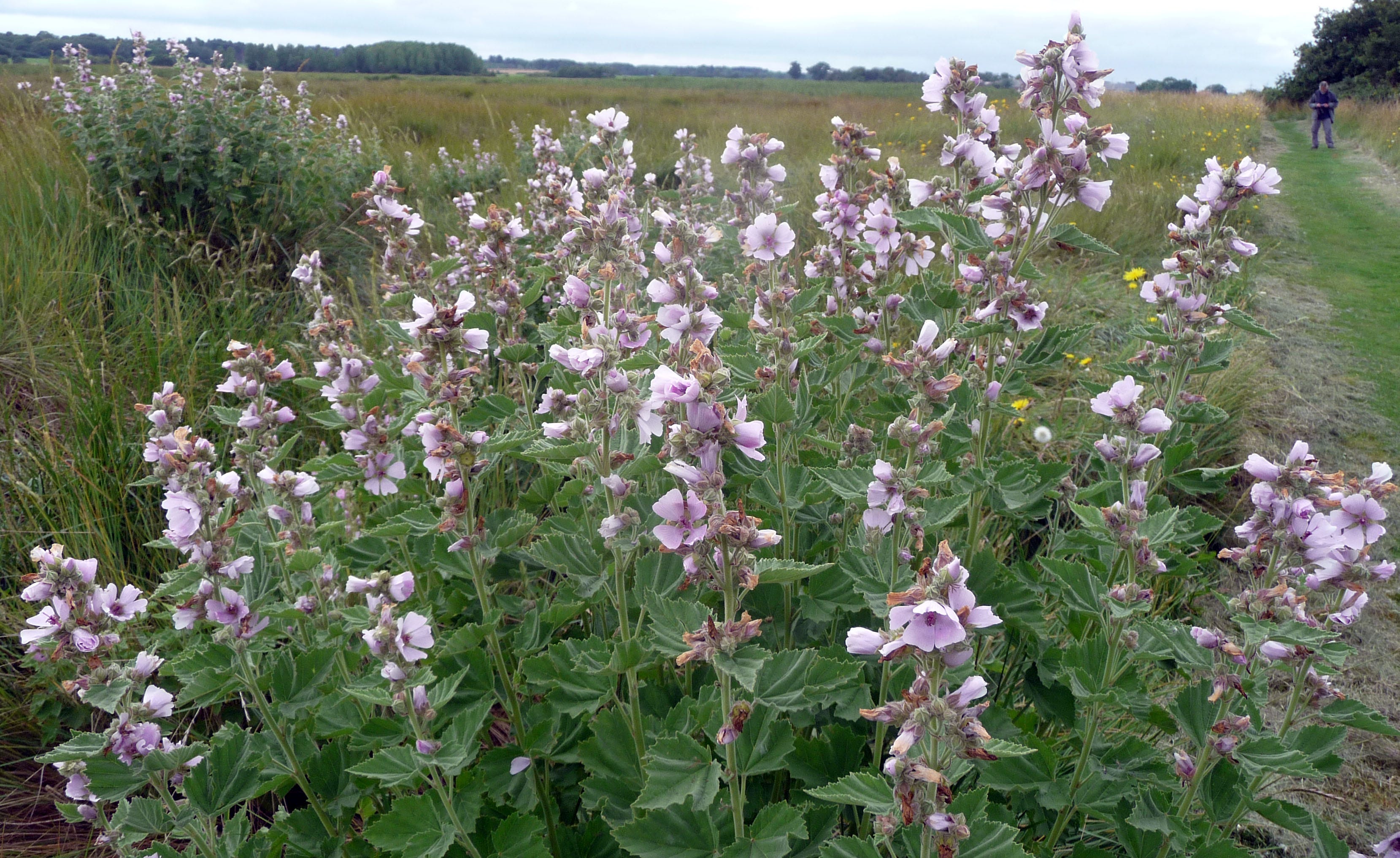
Before it melted at campfires; before Easter’s Peep delirium, marshmallow was a plant in the Malvaceae family. This group is related to okra, hibiscus, cacao, cotton, and hollyhock. There are not many plants at all that are not edible in the Malvacaea family. Every part of marshmallow is edible. Common mallows are also called cheeses, and they’re pretty much everywhere in Brooklyn with round little leaves that look like mini wheels of parmesan cheese. Marshmallow leaves, however, are lightly lobed, grey toned, and toothy. Their flowers are delicate and bold. Wide open five petals each that stop at points at the center. The reproductive parts of Malvaceae flowers are always showy with a bunch of stamens. They emerge where the stem meets the petiole. This is called auxiliary. The faces are lined with nearly transparent rays. The petals are true petals, delicate as moth wings.
For marshmallow the light lilac of the petals darkens into a deep purple in the center. Only a few inches wide. There the stamens are all coiled. These flowers grow on tall fuzzy stems averaging at around five feet. Herbaceous plants have a way of growing exactly as tall as a human, from five to eight feet. Except they grow that tall in a single season. Imagine the supreme energy a being would feel to grow many feet in a single week. Tall and gracious, with small flowers, marshmallow is quite beautiful. Demure even.
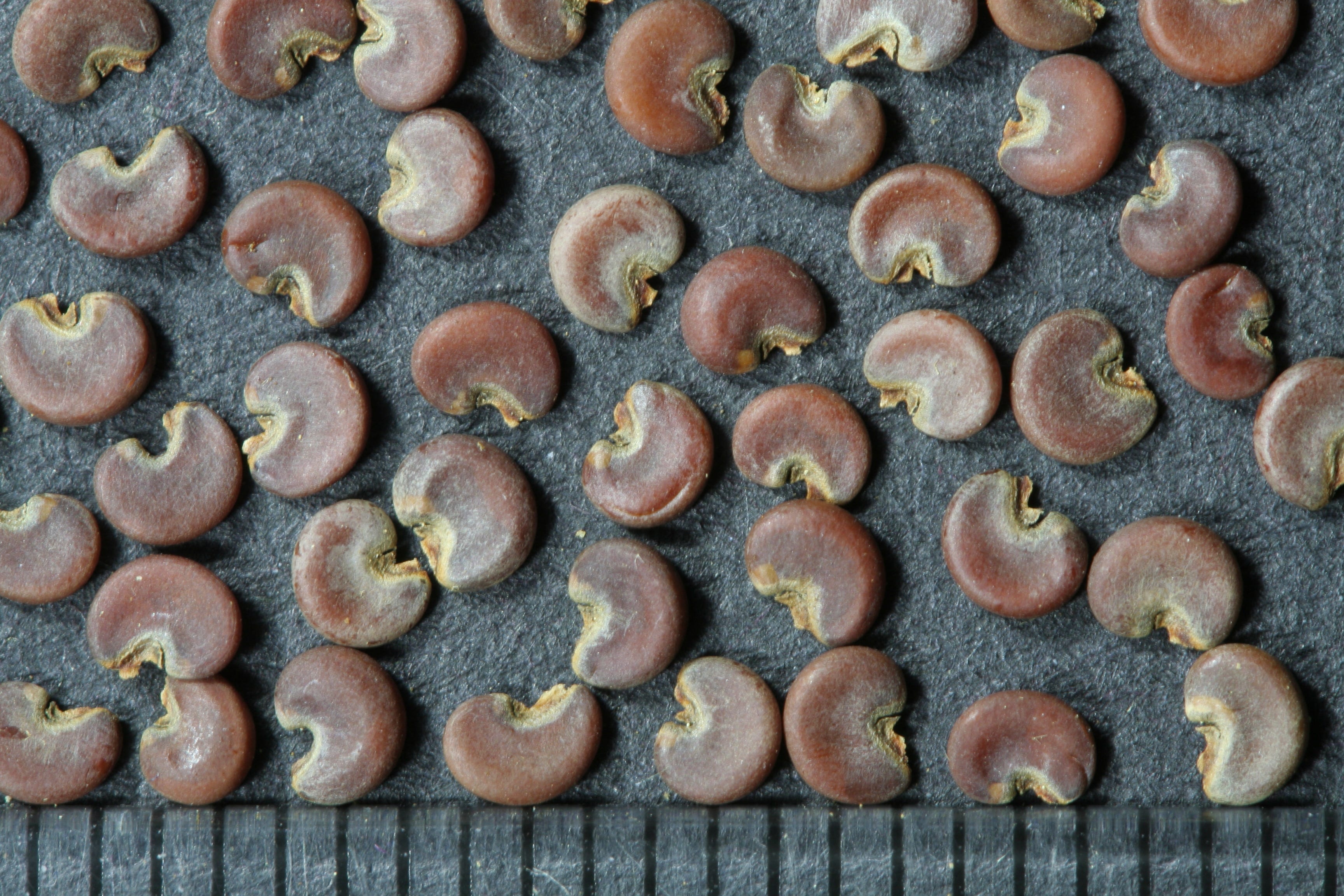
Pollinated by bees, their fruit is a blonde schizocarp that looks a lot like a pincushion and the seeds inside the crescent moon.
Marshmallow is exactly what it sounds like, a plant that grows in marshes. It can even sustain a bit of salt water. They are native to Western Asia, North Africa, and Southern Europe, and their usefulness as an edible and medicinal plant has spread wherever it grows.
The official name is Althaea officinalis which has two meanings, Althaea roughly connotes that it helps the body heal itself, and the officinalis part of the name dedicated to all plants that were once sold as medicinal herbs. Thus the first use of the name comes to be.
Popular legend has it that in the times of ancient Egyptian dynasties, marshmallow root was made into a honey-like mixture that was only eaten by royalty, and tasted by the gods. Everything about ancient Egypt surrounded the river. Marshmallow grows too by the water, marshes, riparian areas, or by the shore, or even just flat land where water can collect and sun can shine down. So even though I have found no scholarly article to prove the honey-thick candy for the gods, I have found that it was, in fact, used as medicine in this ancient time.
As with nearly every non-western medicinal practice, ancient Egyptian medicine was deeply entwined with beliefs in magic. Physicians had specific expertises. Each doctor would be assigned to one area of the body, and dental and surgical practices were well known. They would measure the balance of a person’s body by calculating the pulse of the liquids: water, blood, urine, mucus. Any blockage to this flow was where disease built up.
Despite its value in ancient Egypt, marshmallow has been used for thousands of years in traditional Persian, East Indian, and Chinese medicinal practice. Marshmallow grew in monasteries by streams in medieval Europe. The medicinal preparations are wide ranging. Sometimes the plant is mashed up and placed on wounds for its antifungal or antibacterial properties.
Cut them and the stems drips a thick and continual mucilage, which holds the source of its healing potential. Some have used the leaves to thicken sauces and soups. Even underground, the tap root is still used in teas. The root is the source of the marshmallow we know so well, it’s sourced in the autumn before the frost on a waning moon when the energy is all packed into the pearly organ or so I’ve heard. The extensive uses of the marshmallow include remedies to the liver and the spleen. It has been used to heal and clean wounds, treat coughs and colds, and treat fevers. Because of its flavonoids, phenolic acid, and scopoletin which is common in chicory, stinging nettle, and noni fruit. In Persian medicine it was a cooling and moistening demulcent. The polysaccharide molecules swell in the presence of water, coating the body with a gel, keeping the body flowing.
The Flow and the Glue
Walter Mischel, born in 1930, fled Vienna as Nazis took over Europe. He made up the marshmallow test in the 1960’s at a kindergarten. It was meant to measure a child’s ability to “delay gratification” by not eating a marshmallow right away, then later getting two later - as a reward. I am not a psychologist, but this test seems flawed to me. They have since added levels to it that have further meant to complicate the child’s self control and intentions. Is a teacher being told about this? Or is there peer pressure?
The real test here, is the test of the marshmallow itself. Sure, other versions have used different controls, like chocolate or graham crackers, but marshmallows are the ultimate temptation and thus the key to willpower. Willpower, Mischel notes, is a skill. Certainly, and it connects to the story one tells about themselves. On the most simplistic level, I struggle with the marshmallow test because I believe that there are some days we need to eat the marshmallow no matter how antisocial it seems.
Marshmallows are the pure candy. There is no sophistication about them. It’s interesting that it should not be a chocolate test, but one that connotes sweetness, softness, comfort. Yet, marshmallows are chaotic. All your teeth could fall out with a single sugar encrusted Peep - despite the fact that the plant also used to be used in dentistry. They’re so intense, I’ve heard adults say they can’t eat marshmallows anymore. They are for kids; for eating far too many of. Adults really can’t handle it anymore - the pure sugar.
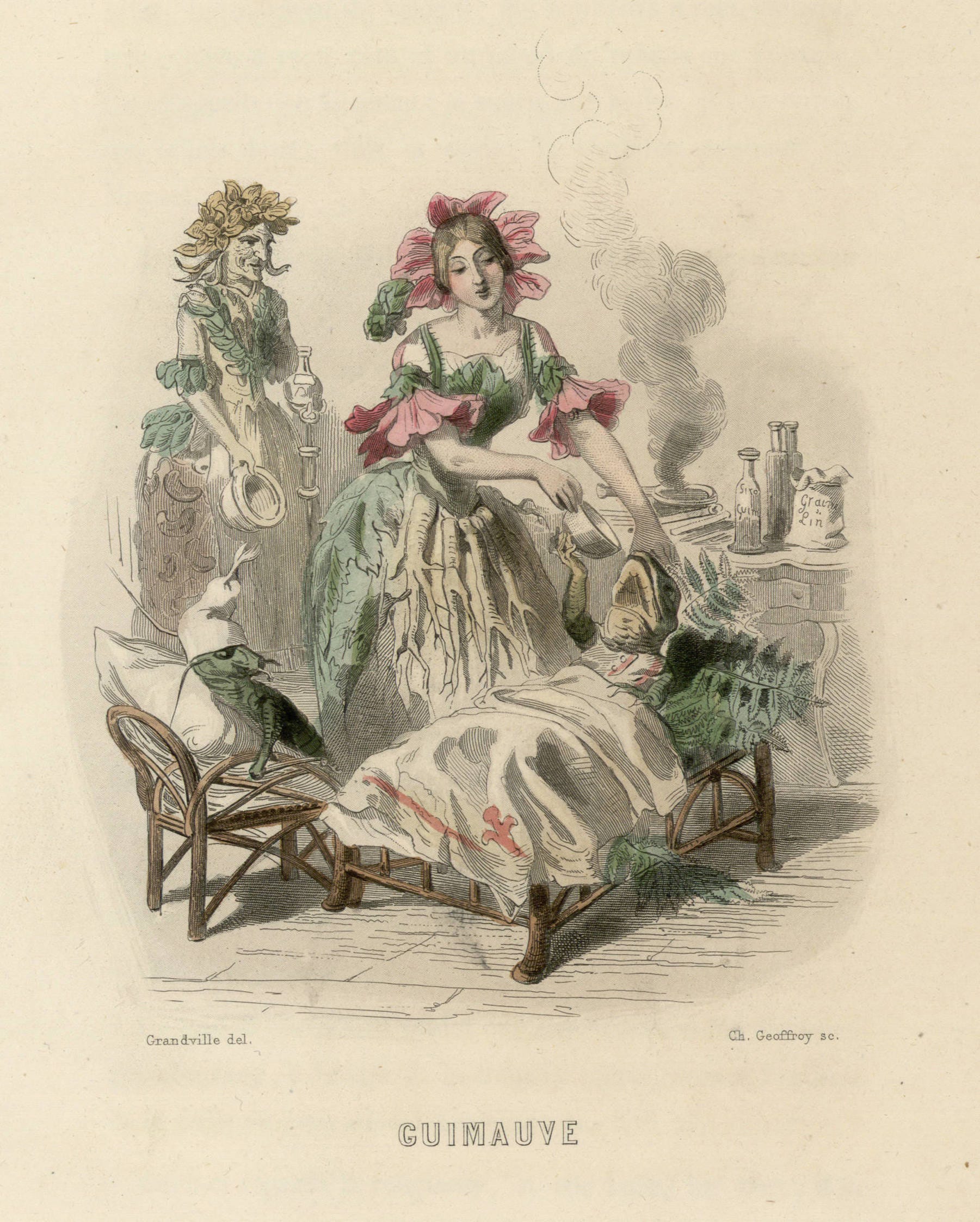
After many thousands of years of a plant as medicine, the French made the marshmallows what they are now. Long before it was a candy marshmallow coated the throat in healing salve in the form of cough drops. The pink of the flowers, is, in fact, what was used to dye the confection themselves. In France they are called pâte de guimauve. The powerful extrusion machine invented by the French Alex Doumak makes the marshmallow the puffy thing it is now, but the root itself has now entirely left the plant and the polysaccharides whose glycerine gel once held it together, have been replaced by gelatin. The plant is gone from the confection.
The name, mallow, however, sticks. And should you wonder what a mallow is, it is not a candy or a bit of fluff. It is a flower. Here, in a world of temptation and battles of will, to be the glue in the havoc. Willpower will only ever go so far. In the end I am not crying anymore.
myth for marshmallow
Text for myth, music for myth, Tchaikovsky - Symphony No. 5, Op. 64, Recorded, produced, and published by: Gregor Quendel, The arrangement is based on the notes by: M. T. & S. Loudon, License Terms: CC BY-NC 4.0, © 2025 CLASSICALS.DE EXCLUSIVE RECORDINGS
Forager Friendly?
No! Not really! It’s declining in its native habitat!
Sources:
https://web.english.upenn.edu/~cavitch/pdf-library/Dioscorides_De_materia_medica.pdf
https://www.iranicaonline.org/articles/katmi/
https://gobotany.nativeplanttrust.org/species/althaea/officinalis/
https://foragerchef.com/common-mallow-plants-cheeseweed/
https://www.thenibble.com/reviews/main/candy/old/gourmet-marshmallows-2.asp
https://www.lewisginter.org/the-original-marshmallow/
https://www.assiniboinepark.ca/stories/213/the-ancient-sweet-treat-marshmallow-plant
https://plantura.garden/uk/flowers-perennials/marsh-mallow/marsh-mallow-overview
https://www.nuhs.edu/botanical-medicine-marshmallow/
The Marshmallow Test, Walter Mischel
https://www.sciencedirect.com/topics/biochemistry-genetics-and-molecular-biology/polysaccharide
https://bernheim.org/news/featured-edible-garden-plant-marshmallow/
https://pmc.ncbi.nlm.nih.gov/articles/PMC8459052/