That's Marigold!
A perfume that traverses the realms

ALSO KNOWN AS: Cempoalxochitl, Mary’s Gold, Tagetes erect, zuico, black mint, chinchilla, huacatay
How to know
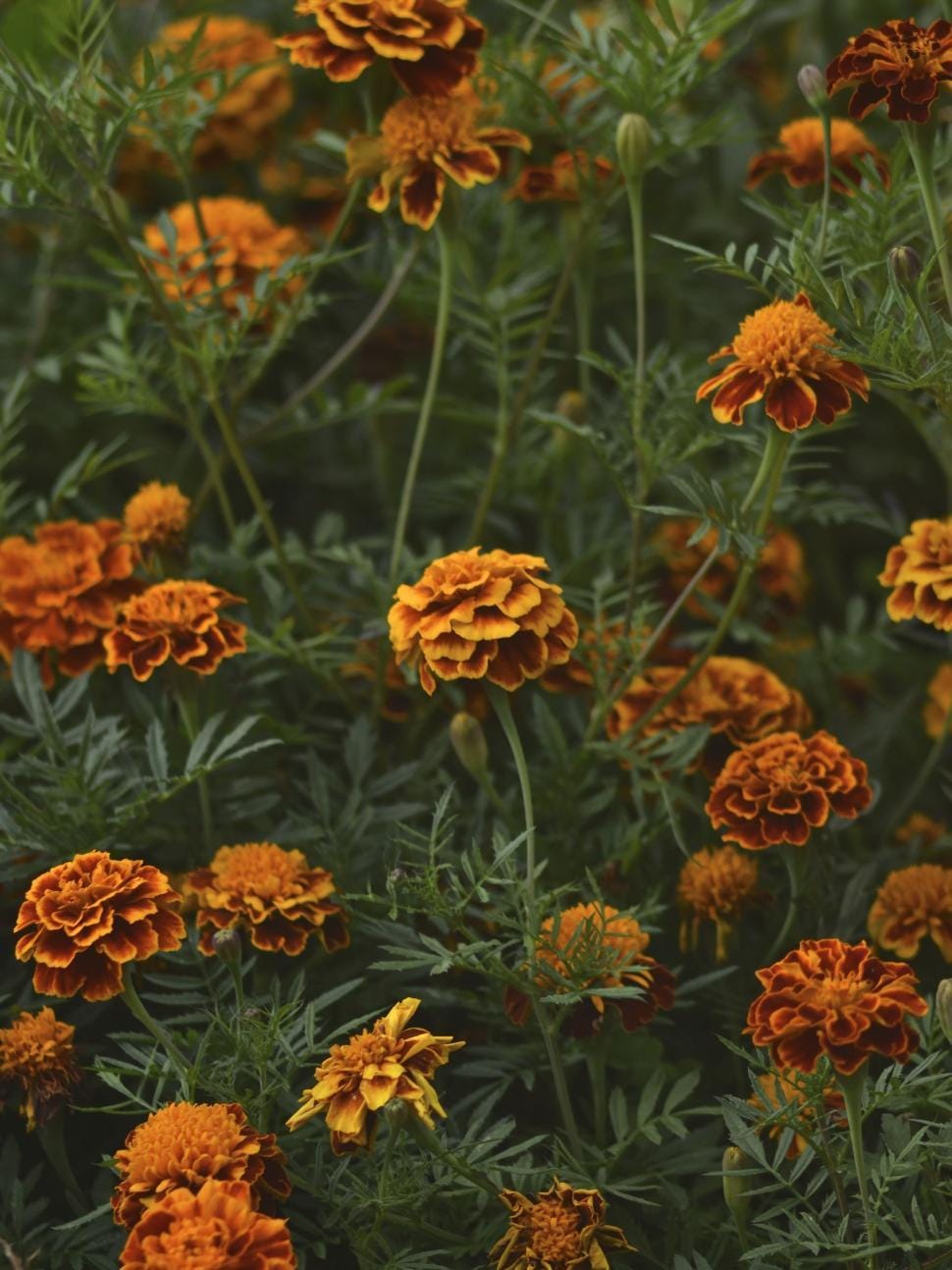
Pinnate leaves (meaning there are leaflets like sumac and ash)
Pom pom golden flowers
Deep green fibrous stems
Opposite growth pattern (for the most part, rules are flexible)
Between 6” and 4’ tall
In a time beyond time the sacred sun god, Tonatiuh, of the Mexica reached their hand from the mighty firmament and gave the people the Cempoalxochitl flower so that they might honor the dead. During this encounter the god must have told people that being alive meant never being far from death. And therein is the light of life, the flower that burns so brightly. Even this flower carries death between its many petals.
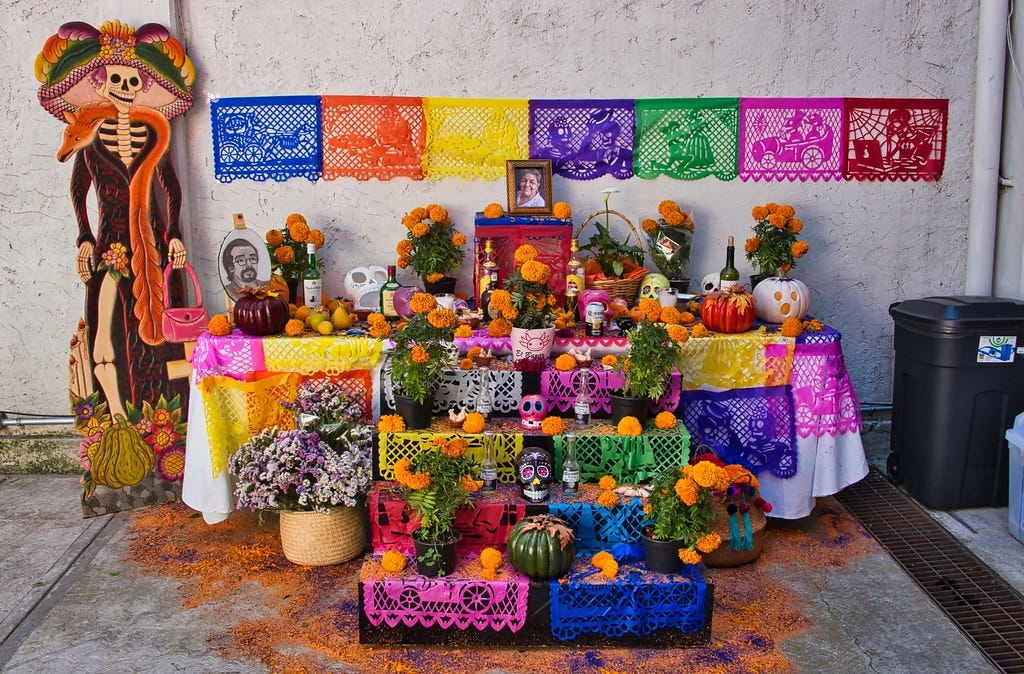
In Aztec, and probably earlier traditions, the marigold holds a significant place in medicine, culture, and agriculture. The plant is most well known now for its role during the Dia de los Muertos festivities. The scent of the marigold guides the dead back to the realm of the living. On the first night, November 1st, the children return to the ofrendas or altars festooned with marigold, sugar skulls, and brightly colored picados. The following night, on November 2nd, the adults come back. Food, of course, can’t be shared between our realms, so to celebrate the return, the living eat the feast they prepared for the dead.
The scent that brings forth lost beloveds is not particularly sweet. It smells soft and peppered and there is a slight tinge of overripeness embedded in the essence. As with everything about the marigold: it is more than one thing.
Flowers and Death
Richness is written in marigold’s color. They are essentially always a flaming color. When used as dye their flower is so vibrant that, unlike many other plants that give off a lighter version of their color or reveal a hidden color when treated, marigolds will give their pigment freely. What you dye with marigold will be golden. The flowers and leaves have an abundance of glands that release their strong scent. This is why they are so pungent and perhaps so generous of tone.
The marigold is in the Asteraceae family, so related to daisies, dandelions, and sunflowers. In the Asteraceae way, the marigold has a composite flower, meaning that there are ray flowers that crowd the small central disk flowers. The petals take all the space they can, growing in frilled layers which wind around the stem in shapes reminiscent of the folds of a full skirt or a brain.
Much of what marigolds relate to is solar in nature. Yet the sight that comes with their solar qualities is the sight of divination. All marigolds are Tagetes, of which there are 50 species. All of them are derived from plants native mainly to Mexico and Guatemala. The name “Tagetes” comes from the divine wise child who sang the Etrusca disciplina which is the text for the religion’s divination. This Tagete child provided first thought of the Etruscan religion, and the first words on which it hangs. Like the easy growth of marigolds, this child emerged miraculously from the furrows in the earth.
The Mexica who built Tenochtitlan and whose culture brought the marigold species into the world have a deep respect for flowers. Their floating gardens were filled with blooms. Their buildings and places of worship overflowed with flowers, many of which were the marigold. This must have made the watery city glow and fill it with perfume.
The Spanish were no doubt amazed and brought this gold in the form of flowers to Europe where the marigold began to transform along the edges of the Mediterranean and the hot fields of France. Wherever marigold is, people are entranced by it. The plants were changed based on cultivation and climate. They became the African and French marigolds. The African is the classic puff of gold while the French marigolds have petals with stronger red, more color variation, and less layers of petals.
Marigold comes from the Spanish tradition of placing these flowers on altars of the Virgin Mary: mary’s gold, thus the name marigold came to be. This tradition was certainly derived from the indigenous Mexica ofrendas. When marigold was introduced into the subcontinent of India the plant was easily adopted into the lush and flower worshiping religion of Hinduism. Now garlands of the hefty flowers decorate homes and altars throughout India, embracing a fullness of life; signifying abundance, creativity, and prosperity. Sometimes they can signify grief as well. Grief is always more than sadness. There are moments of poignant gratitude and joy that exist within it. Whether it be the cultural story that has followed this plant around the globe or its protective and healthful uses, the marigold holds the particular joy that exists within grief.
A Protective Herb
Practically, the marigold is something of a miracle in the way it shields valuable crops. Deer and rabbits will not eat them, and pests can be diverted from them. Even if they are macerated and distributed across soil, they can kill nematodes in the soil which would otherwise decimate crops.
The effects of marigold against these microscopic nematodes can last for up to three years.
In an agricultural setting the marigold will starve out nematodes in the soil, so they can be planted as a cover crop, preparing the soil for food the following year. The marigold is a companion crop, deterring animals from it and thus saving the food which it grows around. In this way it seems to be linked too to death. Even though they are so bright, they have a repellent tendency that animals seem to respect.
They grow in full sun and can be drought resistant, having adapted in Central and South American arid climates. In the shade they develop a powdery mildew that covers the soil. All marigolds have pinnate leaves that make them resemble some sort of fern. The many different varieties of marigold range in height from 6” to 4’ tall and can take up to 3’ of space if they have the right genetics.
Everything about the marigold points to abundance. The petals open out by the dozen in an endless opening from the center in a brilliant gold. Once the plant is pollinated the bloom will close, leaving a tuft of rusted gold and from there the heads will fall and release the seeds.
The seedlings grow easily in a variety of soils. It is a perfect plant for many novice gardeners who will see results without very much effort. The marigold is adapted to high temperatures and arid conditions. But it has also been cultivated to withstand moist soil conditions being cultivated in watery valleys. The marigold bloom opens in the sunlight, in the brightest part of day. What astounds me about the marigold is that they do not simply offer a symbol of death. Their many uses attest to the fact that they are very much alive. Mirroring their ability to protect and prepare soil for agriculture, their cultural uses are cleansing as well. If placed on graves of the dead, their scent cleanses the souls of the departed.
We, the living, repair our ancestors.
The flower in Nahuatl, Cempoalxochitl, means “twenty flowers” or “many flowers”. There are also twenty zodiac signs of the Mexica peoples which might be a connection to the solar aspect of the plant. They are also known as the plant of 400 lives.
Once cultivated in Europe the flower came back over the Atlantic to North America where the seed seller and producer Washington Altee Burpee became obsessed with the flowers, as many have. He had his growers select for many different traits of the marigold, many of which gardeners use today. But what he wanted most was a pure white one. In 1954 he set a challenge to gardeners to create a white marigold, and a gardener in Iowa selected these fast growing plants to a narrow genetic strain that lightened it all the way to white. Now there are white marigolds - which is fine and nothing more than some guy’s fancy. But they just don’t compare to the brilliant gold. How could they?
The medicinal and culinary uses of marigold are extensive. In traditional Aztec medicine there was a humors framework. Marigolds were used to treat illnesses related to cold and phlegm, which were considered to be a build up of water. In other words, the marigold heated and dried the system. Traditionally, their seeds have been toasted, their stems turned into powder. They were smoked. Paste from the huacatay marigold is used as a staple herb in Peruvian cuisine.
They have antimicrobial, antiseptic, antispasmodic, and antihistmin effects. They also have a very slight narcotic effect. Powdered marigold may have been used on sacrificial victims during the Aztec empire, further underlying the way this plant spread through many parts of life. Either way, these slight stimulating responses to plants are used to relax the body and calm the mind. So they have been used to treat stomach conditions, and skin conditions, and soothe throats. The petals are edible, though their stems could potentially be poisonous if not prepared correctly. They were used to staunch soldiers’ lesions during the civil war for their innate wound healing compounds.
Flowers in so many cultures represent this ephemeral life we live, whether they are sakura or lilies. Marigolds may represent the inherent fleetingness of life, but they do one more thing. They link this life to whatever else there is. Because we are alive we have our ancestors. Because we have our ancestors, we summon them back. We, the living, would not be here without them, we form them. Because we are alive, the dead are with us. And in celebrating this plant we honor both life and death. As long as we recall them in this place the dead can participate in the flowers too. This is not woo woo or ghostly. We carry their DNA, their memories. We have their hands or eyes or hair. We know their stories. Rather than this being tragic, it is a thing to shine light on.
myth for marigold
Text for myth (music attribution Music by Bensound.com License code: 7ZYDWVLIDUUEHILX)
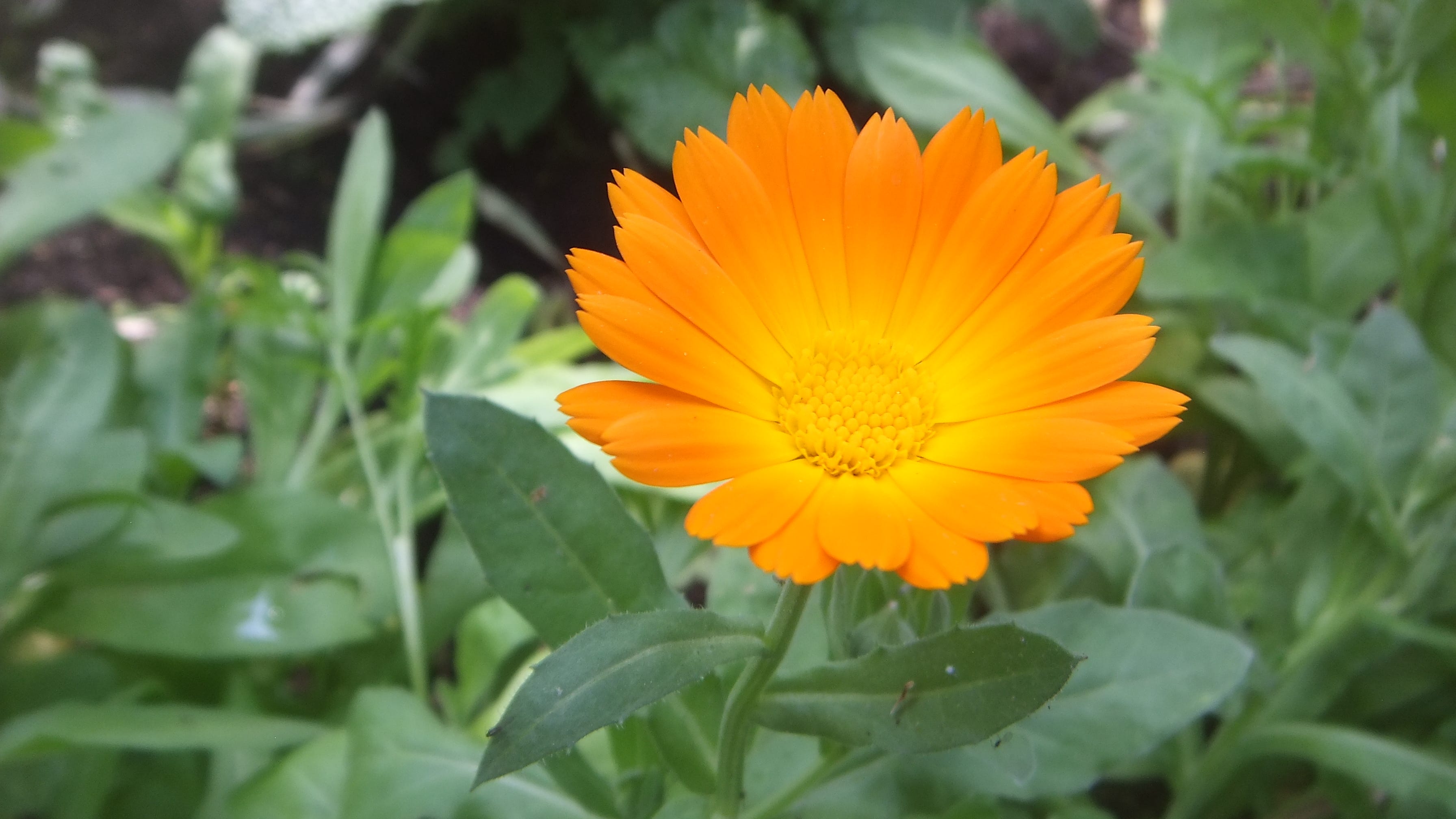
Not to be confused with calendula. Sometimes these are called pot marigolds, which has layered petals and a golden texture. Calendula is a medicinal plant native to south eastern Europe into the Eastern mediterranean area.
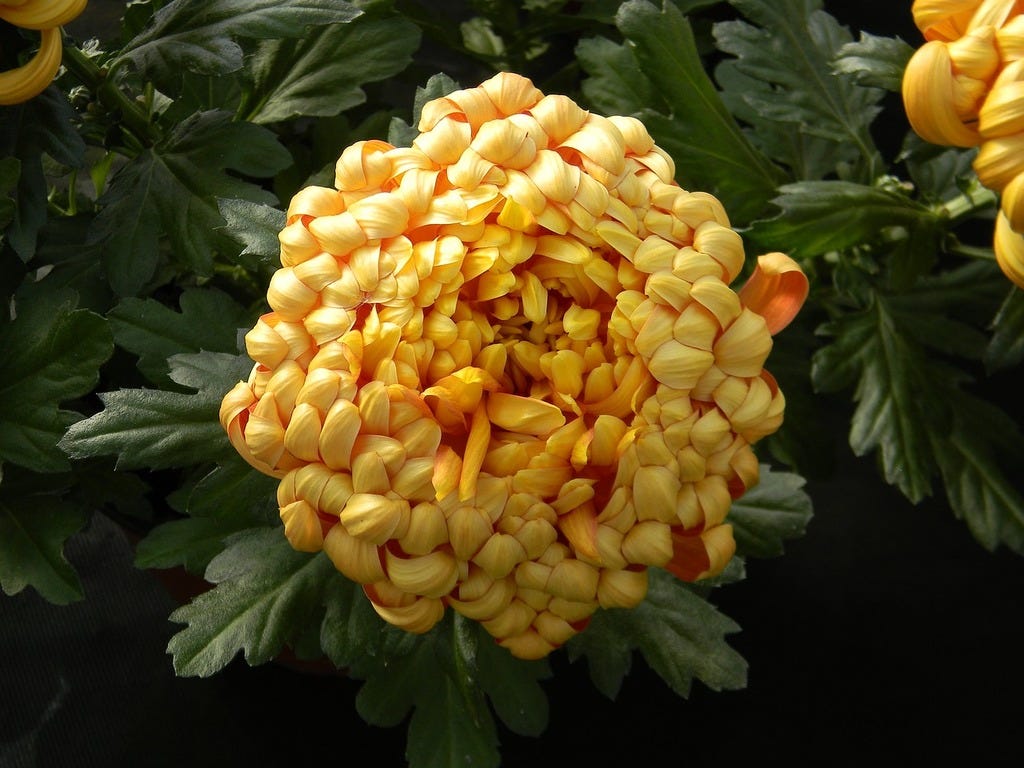
Or chrysanthemums whose large pom pom flowers resemble the marigold. But their petals are lance-shaped instead of rounded.
Forager Friendly?
Yes, plant them yourself!
Sources
https://www.youtube.com/watch?v=8xzrmyExnEU
https://www.youtube.com/watch?v=du81mWHNIPw
https://www.almanac.com/plant/marigolds
https://hort.extension.wisc.edu/articles/marigolds/
https://www.harvesting-history.com/marigolds/
https://www.youtube.com/watch?v=w3BpWxjLr2w
https://www.youtube.com/watch?v=zo9OOqwOdo4
https://libguides.ollusa.edu/diadelosmuertos/marigolds
https://www.britannica.com/topic/ancient-Italic-people#ref249593
https://www.theperfumechronicles.com/chronicles/marigold
https://www.youtube.com/shorts/rtk83r7tzXI
https://thursd.com/articles/flowers-bhagavad-gita-hinduism
http://heritagegarden.uic.edu/marigold-tagetes
https://www.jstor.org/stable/4252990?read-now=1#page_scan_tab_contents
https://www.mexicolore.co.uk/aztecs/health/aztec-herbal-pharmacopoeia-part-1
https://www.mexicolore.co.uk/aztecs/home/the-aztec-art-of-mourning
https://www.britannica.com/video/Overview-marigolds/-192215
https://en.wikipedia.org/wiki/Tagetes
https://symbolsage.com/marigold-flower-meaning/
https://blogs.ifas.ufl.edu/putnamco/2023/10/26/marigolds-blooms-of-cultural-significance/
https://www.sciencedirect.com/science/article/abs/pii/S0924224418309269
Marigolds in film
https://www.youtube.com/watch?v=fNRZ8hprplU
https://www.youtube.com/watch?v=yOvfedkA_JM
https://www.imdb.com/title/tt1841598/