
That’s Jade Plant!
Starting over - on a new rooted leaf

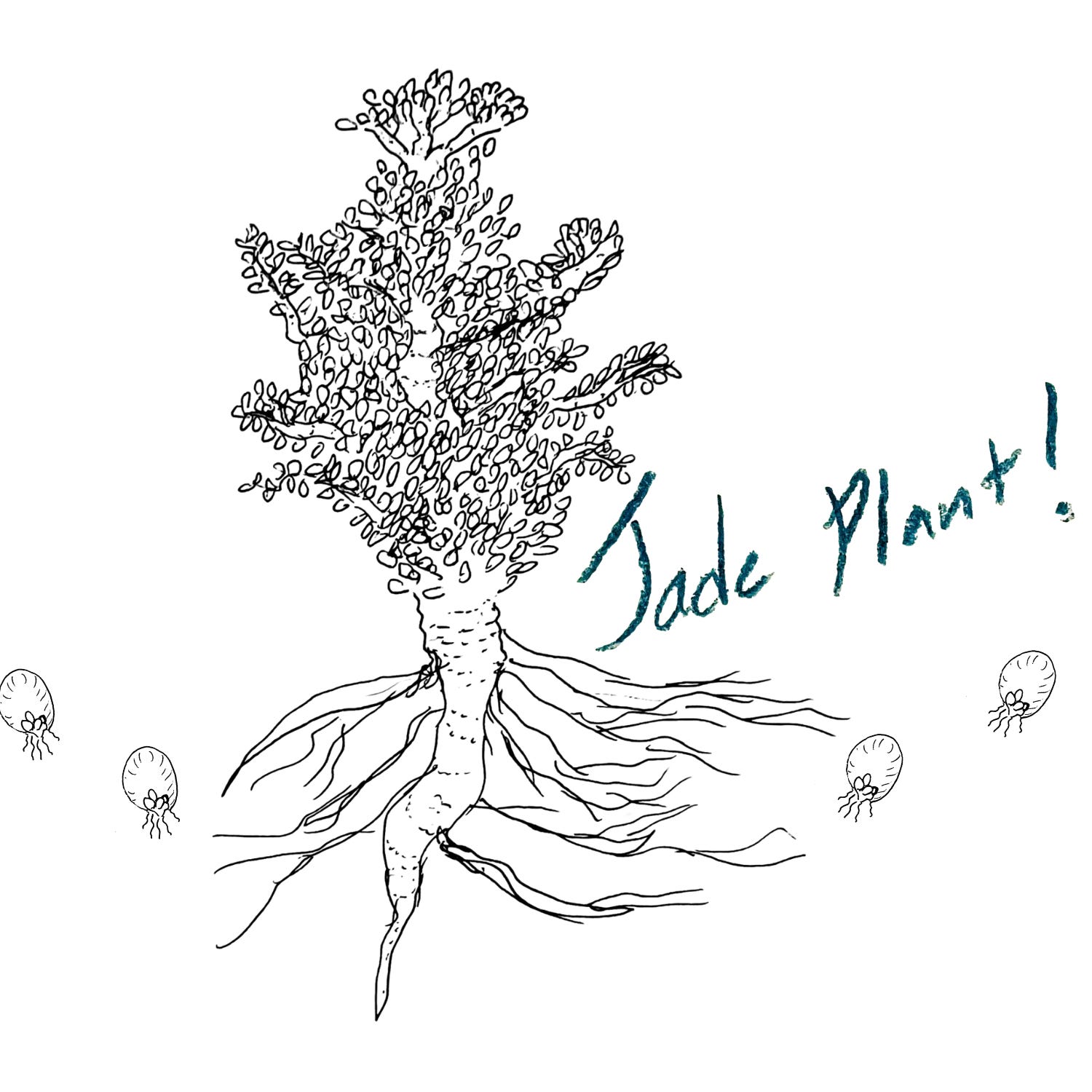
ALSO KNOWN AS: kerky bush, jade plant, pink joy; beestebul, kerkij, kerky, plakkies (Afr.); t’karkai (Khoi); umxhalagube, Crassula ovata, money plant, lucky plant
Protected in the open courtyard of the Temple of the Earth in what is now Beijing, was a plant once known as a “jade flower.” It was celebrated for its fragrant white inflorescences tinged with pink and valued as a medicine. So there it lived, like a beating heart in this sanctified place. As one of the oldest civilizations in the world, ancient China endured many invasions by nomadic peoples who historically controlled the vast plains around China. Legend has it, there was a northern invasion long ago and the precious jade tree was destroyed. Some believe this tree may have been a species of hydrangea but no one knows for certain. The mystery of the jade tree remains. But the jade plant exists, and while it’s unlikely the two are one and the same, the jade plant might be a kind of doppelgänger, able to stand in some of the places the jade tree could once have been.
Palace of Jade
The true home of jade is South Africa. From above, jade’s endemic biome looks like some divine brush swept along the bottom coast of the African continent. It’s green there, marked by the rippling mountains of the Eastern Cape and the KwaZulu-Natal valley. About 50 million years ago this biome was a rainforest. After millions of years this land dried while the plants bulked up with water. Now it is a great expanse of succulent shrubbery and open to the sun. This is called a Thicket.
The jade developed here, a confident emerald alongside euphorbias, aloes, and a multitude of other succulent plants.
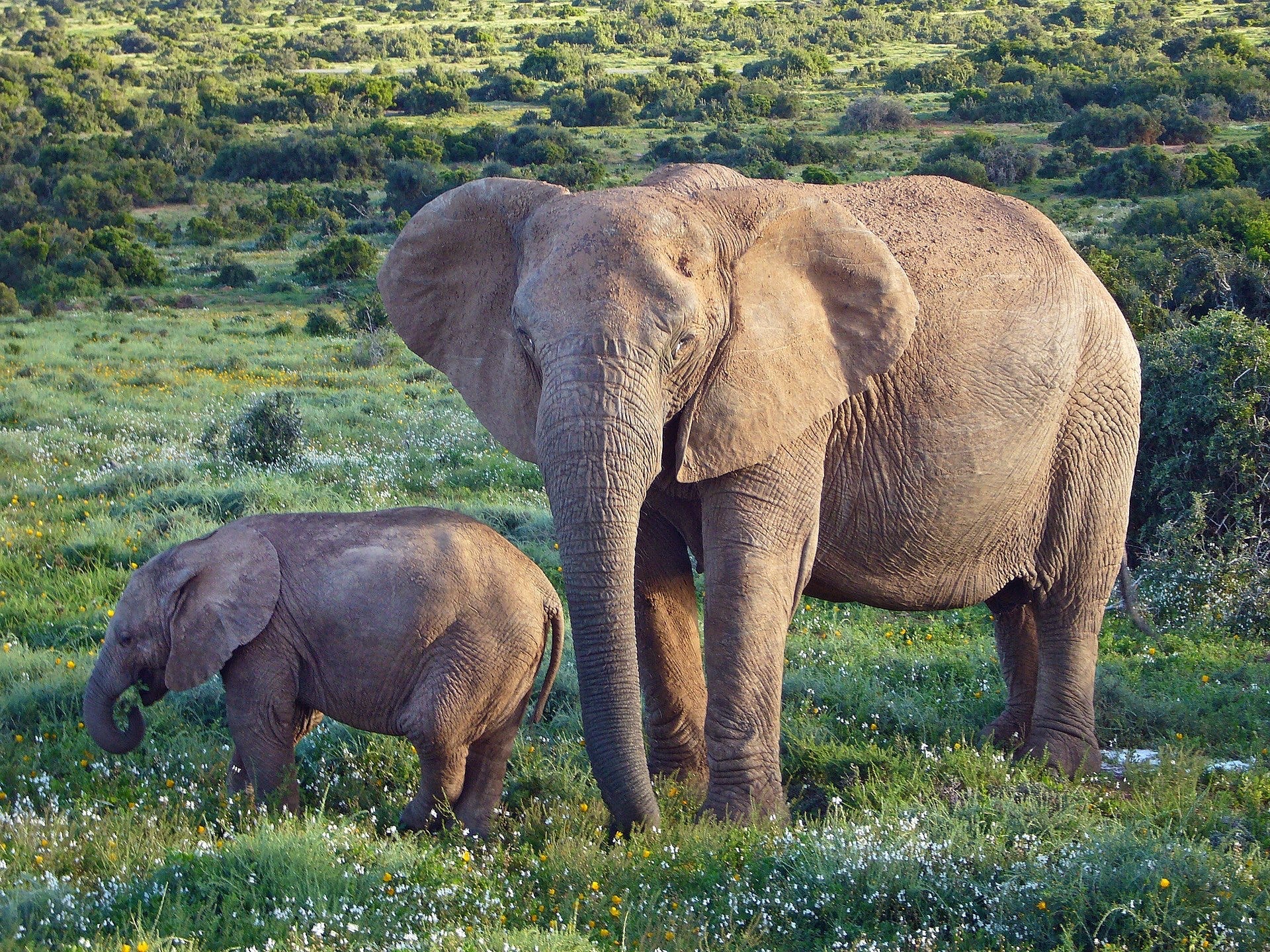
Jade plant grows in non-contiguous sections throughout Eastern South Africa into Mozambique, not at the coast, but not far from it, rolling down sandy slopes. It’s believed that tucked in these valleys and slopes the Fabacae family came to be: that’s beans, clovers, and peas. Here precious megafauna like rhinos and elephants manage the land. Elephants coppice the thick shrubland, while rhinos pass seeds quickly, and yet the thickets here are encroached upon by the domestic herbivores like Angora goats who make up most of this land now, as it has been turned into pasture. A large percentage of mohair comes from here, fed by these thickets. While jade has adapted to some grazing, and can even survive a good knock over, the persistence is drying the soil and thus heating the place.
Not Quite Cake
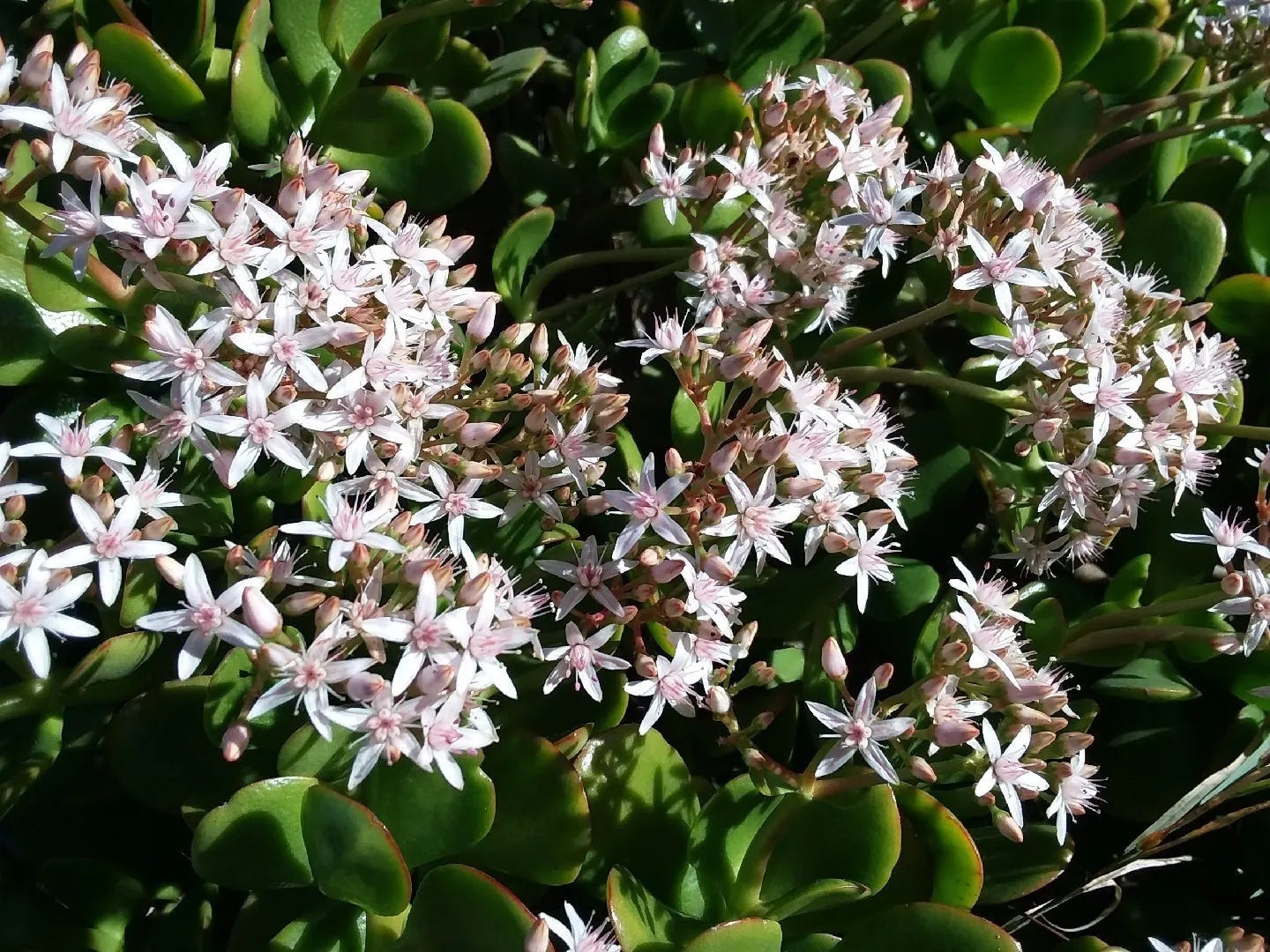
The similarity between the lost jade tree and jade plant begins with the flower. As part of the stonecrop or orpine family, the jade plant is identified by star-shaped flowers, like the ones we drew in school with five perfect points. While the flower is rare in home settings, with enough sun, the jade will bloom with aromatic umbel inflorescences.
The stars are bisexual, with these perfectly bursting stamens, arced in choreography sublime as artistic swimmers, anchored by plump pistils. Five of each - just about. They bloom at the moment between the thicket’s wet winter time and drying spring.
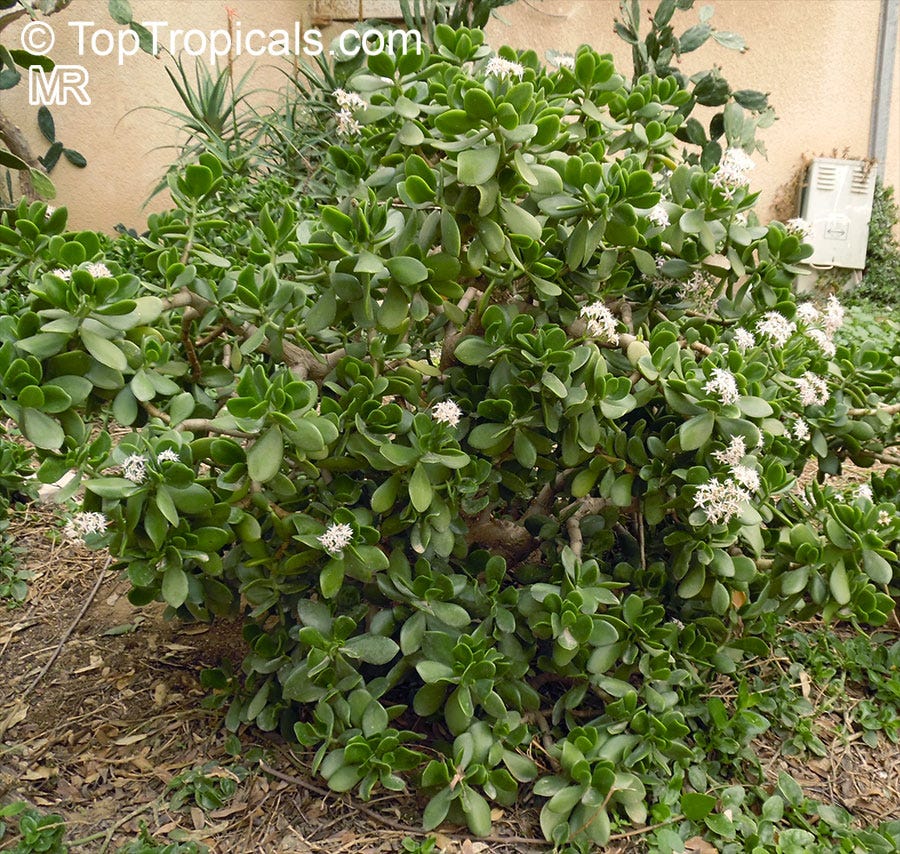
Jade plant wears a hefty armor. The treelike stem even matures to the point of peeling and the places where branches fall off scab over, just like on trees. The stem is thick, rough and brown. But this rough exterior is only an illusion. It’s not cake, but it knows the game. The jade plant is succulent all the way through. Cut the stems anywhere and see the way the water runs through it. It’s the color of jade inside, as if it’s made of the milky green mineral itself.
The jade plant can grow up to six feet, but it must balance itself or it will break against its own weight. Which might not actually be the worst thing. Crassula plants have responsive wounding. Where many plants grow from nodes in the plant, Crassula can grow from any part of themselves because they have a scar tissue that supports meristem cells. Jade has mastered the art of reconstruction. A single leaf, cut eight times over can develop those rootlets and little leaves will grow off the severed leaf.
So the spines of a cactus are primarily for water management. But jade is a cactus without spines. Instead of shrinking and hardening, the leaves bulged out and began to practice a flipped form of photosynthesis. It conserves water by employing the Crassulacean Acid Metabolism. The stomata close during the day to preserve water and take in CO2 at night. Due to the build up of malic acid through this process during the night their fruits become sour in the morning and bitter in the afternoon. Pineapple uses this kind of delayed photosynthesis, so anyone who has eaten a pineapple picked in the morning might have tasted this. Plants that use this kind of respiration have balloon looking cells, almost reflecting that jade plant itself. The cell walls are thin. Look closely and see the stomata dot the leaves in subtle wells. 90% of all herbaceous plants are water. Almost like us.
The branches are always opposite as are the thick, egg shaped, leaves. They burn red when they are in the sun, revealing the carotene inside, this is exactly what the plant wants: to have at least six long hours of daylight. They look like they’re holding smoldering embers at their ends. Their petals too, can tinted or lined with pink. While the plant can change color and can somewhat change shape. But the plant itself doesn’t have much variation depending on where it grows.
The thick roots make their way through clay, sandy, or slightly loamy soil. They draw up water from deep in the ground. There a jade plant can regulate the water in the soil, making a small microclimate right where it stands. These plants take such responsibility for the soil where they live they can even be used in phytoremediation by drawing heavy metals out of the soil: another kind of splitting up.
There are about 150 Crassula plants, all cacti. While many of them are arid plants, like jade, some live in swamps and some in straight deserts. The same stomata that manage arid plants also create arable plants in more aquatic situations, these are called hydathodes. Some grow in New Zealand and look like fairies flowers, and some look like turtle noses. This wide range of plant species could signify a plasticity in the species and lend to its inherent adaptations and forgivenesses for plant aficionados.
Responsive Wounds
You can have a plant in your house for as long as you like. People say they’ve had jade in their families for generations. A great grandmother with jade. They’ll live next to you and yet we miss so much of them. The elephants are gone. The tiny insects their flowers are adapted to summon, are not there.
I killed my jade. It didn’t have enough sunlight and I overwatered it. It rotted and fell. Looking back, if I had known to cut it, I would have. But even then, it would have suffered in my shadowy apartment.
Jade became a houseplant because it is nearly indestructible.
In arid environments jade can be an ornamental plant, a shrub delineating a difference between places. Ownership maybe. But maybe just a marker.
In the 1800’s when Europe got into that imperialist frenzy and rolled up the land, tied people to plantations, and extracted for every part of the earth they could find, here a Dutch explorer took jade to Europe and it was put into greenhouses.
The connection between South Africa and China is not clear. I have not been able to track the way jade moved from its home in South Africa to the homes of so many, with countless blogs about how, according to Feng Shui, jade plant will bring wealth and friendship. Perhaps it was adopted into Chinese culture for the way it seems to glow green, and resemble the sacred jade all the way through. Jade is also soft as minerals go. Sometimes a jade plant is shaped into a bonsai because of how easily and quickly it will take to a new form after being clipped. Either it was by way of Dutch explorers, or perhaps it was a long journey across the soft Indian Ocean before imperialism. Either way, the jade plant has been given a powerfully significant name, and has intentional positions in people’s homes throughout the world.
It’s easy to come across superstition as it pertains to plants, and jade is not only a symbol, it is also an ethnobotanically boon. I’m not a scientist so I can freely speculate that superstition is a grey area - I think there is a contextual aspect to medicine. There are indigenous sciences that can be used in conjunction with western science. Plants are also changing all the time. Some scientists speculate that because of air pollution it has been found that the genomic sequencing has been altered within jade, which could change the potency of its medicinal potentials.
Much of the traditional uses of jade plants are not proven by western science. The Kamba community believe that the juice extracted from this plant helps heal topical burn wounds. Studies have proven that it is effective in inhibiting the development of e. Coli. It potentially has anti-inflammatory and antioxidant properties, and studies are being done to find out ways it can prevent cancer. Many have lathered a wart with jade and said that it will, in three days, disappear. Medicine from jade has been used to treat diabetes, and it is a traditional remedy to treat stomach ailments and epilepsy when boiled in milk.
What comes of fragmentation is a kind of finding of separate parts. Boxing up to create new meaning. This is human and it’s not necessarily evil to separate, it is a great power. Because like the jade plant, those meanings, if given care, can grow into new ideas.
It was the Night of Mathematics in the Brooklyn Public Library, an event people circled the block to visit, and a filmmaker was speaking to many of us in a crowded room — about dreams. And she brought up a woman who is a healer in South Africa. The filmmaker described how the woman broke up of food for the ancestors.
She spoke to those fragmented parts as she broke them, speaking words into the mystery. To break something apart, the filmmaker inferred, is to move it into another form, to make it something different, and then reconstituted, to trust the breakdown and finding unexpected places to grow again. Like the lost plant in the Temple of the Earth: where once something magnificent was, now there is something else, quite reformed.
myth for jade plant
Text for myth, Music for myth: Recorded, produced and published by: Gregor Quendel, The arrangement is based on the midi notes by: Bernd Krueger, Edvard Grieg, “Solitary Traveler”, part of Lyric pieces series, CC BY-SA 4.0
Forager friendly?
No!
Sources
https://pza.sanbi.org/crassula-ovata
https://www.cabidigitallibrary.org/doi/10.1079/cabicompendium.113574
https://www.gardnermuseum.org/blog/auspicious-arrival-jade-herald-good-fortune
https://www.ebsco.com/research-starters/botany/c4-and-cam-photosynthesis
https://main.wsgs.wyo.gov/mineral-resources/gemstones/jade
https://www.picturethisai.com/wiki/Crassula_ovata.html
https://www.oneearth.org/ecoregions/albany-thickets/
https://www.reforestaction.com/en/magazine/south-africa-albany-thickets-science
https://academic.oup.com/biohorizons/article/4/1/13/238409?guestAccessKey=
The Garden Flowers of China, Li Hui-Lin
https://www.researchgate.net/publication/268443219_Albany_Thicket_Biome
The Timber Press Guide to Succulents of the World
Legends of the Leaf, Jane Perrone

Scrapbook for jade plant…
